
Published on: May 15, 2026 | Time to read: 18 min
Event content capture transforms live moments into valuable marketing assets that extend your event's lifespan and ROI. This strategic process goes beyond simple recording to create a content engine that delivers 40-60% higher engagement in post-event campaigns and builds your brand's authority long after doors close.
Key Takeaways
- Event content capture transforms a one-time event investment into a year-round content engine with 30-50% higher attributed sales pipeline.
- A three-phase approach (pre-event planning, on-site execution, and post-event repurposing) ensures you maximize content value.
- Professional-quality audio is often more critical than perfect video—use lavalier mics close to speakers and direct audio feeds from the soundboard.
- Create a content matrix to turn one keynote into multiple assets like blog posts, social clips, and email content through strategic atomization.
- AI tools are revolutionizing repurposing by automatically creating transcripts, identifying key moments, and generating social posts from event recordings.
- Measure true ROI beyond vanity metrics by tracking leads generated, content-influenced sales, and conversion rates from repurposed assets.
Table of Contents
- Why a Content Capture Strategy is Non-Negotiable
- Your Blueprint for an Event Content Capture Plan
- The Essential Types of Content to Capture
- Measuring the ROI of Your Event Content
- The AI Revolution in Event Content
- Conclusion: Turn Your Event into a Content Goldmine
What is Event Content Capture?
Event content capture is the strategic process of recording your event to create marketing materials. It goes beyond simple photos and videos. The main goal is to turn live moments, like speaker sessions or attendee interactions, into valuable assets that you can use long after the event is over.
Think of it as extending the life of your event. All the energy, insights, and excitement do not have to end when the doors close. By capturing content, you can share the best moments with a wider audience. This helps reach people who could not attend and keeps the conversation going.
This approach also delivers a powerful return on investment. Instead of a one-time splash, your event becomes a source of material for weeks or months. For instance, an analysis of post-event marketing ROI from Wolf & Company found that nurture campaigns using repurposed content can see 40-60% higher engagement.
Effective event content capture is not just about pointing a camera and hitting record. It is an active, planned part of your overall event marketing strategy. It means knowing what moments you want to capture, how you will use them later, and who you're trying to reach. This planning makes all the difference.
Why a Content Capture Strategy is Non-Negotiable
Your event is over. The attendees have gone home and the venue is quiet. But what about the investment you made? Without a plan, all the value created during the event can simply vanish. A content capture strategy prevents this waste by turning a single moment in time into a long-lasting business asset.
The biggest benefit is extending your event ROI. Instead of a one-time expense, your event becomes a content factory. In fact, SpotMe explains that a single event can be repurposed into dozens of smaller assets. This provides a steady flow of material for your blog, social media, and email newsletters for months to come.
This strategy also keeps your audience engaged. People who attended can relive their favorite moments or catch sessions they missed. For those who could not make it, you are giving them a taste of the experience. This builds a powerful sense of community and makes them more likely to register for your next event.
Turning talks and presentations into blog posts, videos, and guides establishes your brand as a leader. This builds trust and authority in your industry. Each piece of repurposed content is also a new opportunity for people to find you through search engines, boosting your online visibility over the long term.
Finally, this content is a huge asset for your sales team. A short video clip from an expert's talk can be more powerful than any sales brochure. Reps can share these materials with potential customers to answer questions, overcome objections, and build stronger relationships. This directly connects your event investment to revenue generation.
Ultimately, a content capture strategy transforms your event from an isolated moment into a year-round content engine as described by RingCentral. It is not an extra cost; it is how you unlock the full value of your event budget.
Questions to Ask Before Planning Your Content Capture
- What are the top three goals we want to achieve with our event content?
- Which sessions or speakers will provide the most valuable insights for our audience?
- What formats (video, audio, photos) will best showcase our event's unique value?
- How will we ensure consistent quality across all captured content?
- What resources (equipment, personnel, budget) do we need for successful execution?
- How will we organize and store content for efficient post-event access?
- Which channels will we prioritize for content distribution?
- What metrics will we use to measure the success of our content capture efforts?
- How will this content support our sales team's goals?
- What legal considerations or permissions do we need to address before capturing content?
Your Blueprint for an Event Content Capture Plan
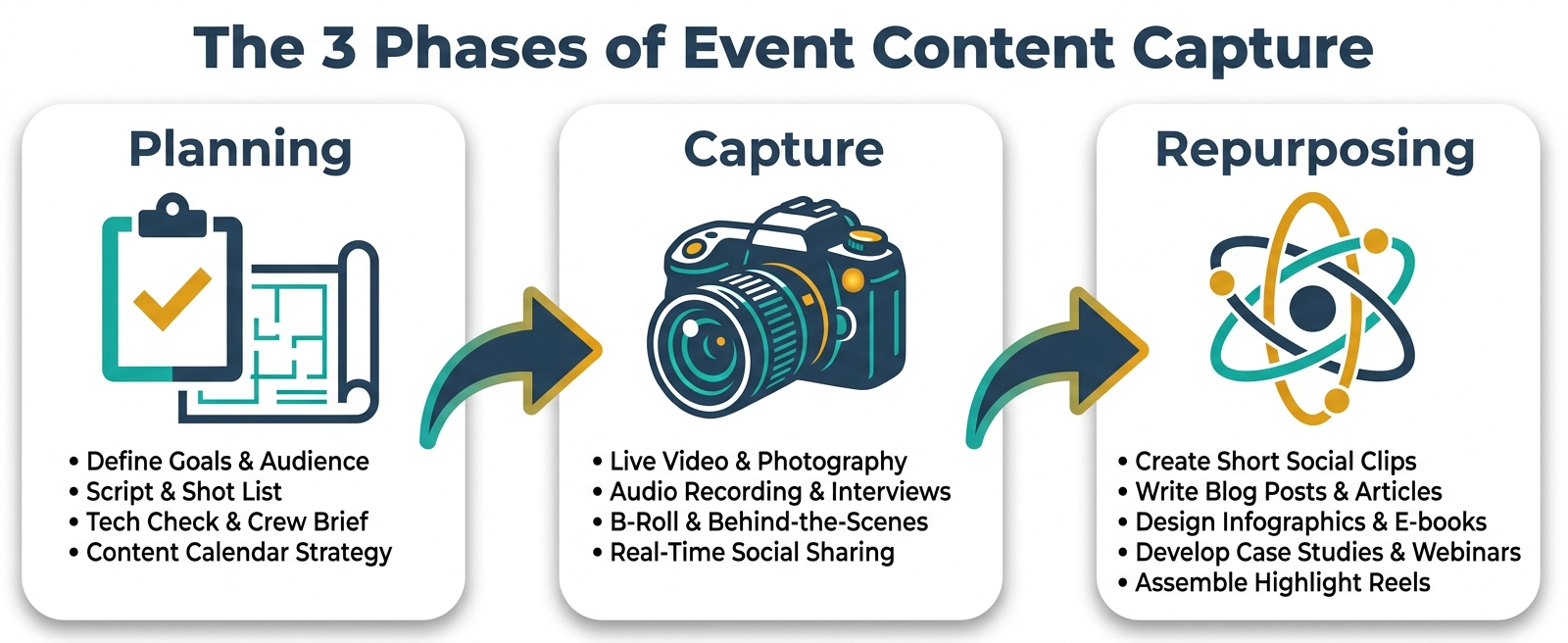
A successful event content capture strategy does not happen by accident. It requires a clear blueprint. Thinking about it in three simple phases makes the whole process much easier to manage. This framework ensures you know exactly what you need to do at every stage: before, during, and after the event.
The first phase is all about planning. Before your event even begins, you must decide what content you want to create. This means setting clear goals and identifying key moments, like speaker presentations or panel discussions. This strategic foresight is what truly unlocks the value of your efforts.
Next comes the capture phase. This is when your team puts the plan into action during the event. With your goals already defined, you can focus on getting high-quality recordings of the most important sessions and interactions. Your crew knows exactly what shots and sound bites to collect for later use.
Finally, the post-event phase is where the magic really happens. This is where you transform all that raw footage into polished marketing materials. As the event agency Cramer points out, this is how you turn a moment in time into long-lasting assets that extend your event's reach and impact.
Phase 1: Pre-Event Planning & Strategy
Good planning is the foundation for success. You would not build a house without a blueprint, and you should not start capturing content without a plan. This phase is all about deciding what you want to achieve before your event doors even open. It turns a chaotic process into a focused, strategic mission.
Your first step is to set clear, specific goals. What exactly do you want to create from this event? Do not just say "some videos." Be precise. For example, aim for ten short social media clips, three detailed blog posts from key sessions, and one exciting sizzle reel. Having firm targets makes your efforts measurable.
Next, create a detailed "shot list." This document is your guide for the capture team on the day of the event. It should list the specific speakers, sessions, and panel discussions you want to record. Also, include plans for candid attendee interviews or behind the scenes moments. This list ensures no key opportunities are missed.
An ambitious plan can lead to a mountain of valuable content. For example, by planning ahead, an agency helped the medical company Lumenis transform their conference presence. They captured over 35 expert interviews and created more than 60 social media clips from just two events. This shows how a clear strategy delivers massive value.
Finally, you must brief your content capture team. Whether they are internal staff or outside pros, they need to understand your goals. Share your shot list and your brand style guide so the final content looks and feels consistent with your company's image. This alignment is what leads to a professional and cohesive result.
Phase 2: On-Site Execution
Event day is here. Your pre-event plan is ready, and it is time for action. This is the moment your team follows the shot list and brings your strategy to life. Success during the event comes from being organized and prepared to capture every valuable moment as it happens.
Think about two kinds of content you will capture. The first is for 'live' sharing, like quick videos for social media stories. This creates instant excitement. The second is 'evergreen' content. These are high-quality recordings, like interviews and full talks, that you can use for weeks or months.
Never underestimate the power of sound. In many cases, clear audio is more important than perfect video. Viewers will quickly leave a video if they cannot hear what is being said. In fact, advice from live event professionals confirms that good sound is critical for holding an audience's attention.
So how do you get great audio? The easiest way is to place the microphone close to the person speaking. A small lavalier (or lav) mic clipped to a shirt is much better than a camera microphone from across the room. This simple step helps separate their voice from background noise.
To manage this process smoothly, assign a 'content wrangler.' This person is your on-site leader for all things content. Their job is to manage the shot list, coordinate with the camera crew, and find key speakers or attendees for interviews. They make sure nothing important gets missed in the rush.
This on-site phase is dynamic. Your team captures planned sessions while also looking for unexpected magic. A great testimonial or a funny moment can become fantastic content. Staying flexible is just as important as sticking to your plan. It lets you capture the true spirit of your event.
Phase 3: Post-Event Repurposing & Distribution
The event might be over, but your content journey is just beginning. This is when you turn all the raw footage you captured into actual marketing materials. This final phase is where you multiply the value of your event investment and ensure it has a lasting impact on your audience.
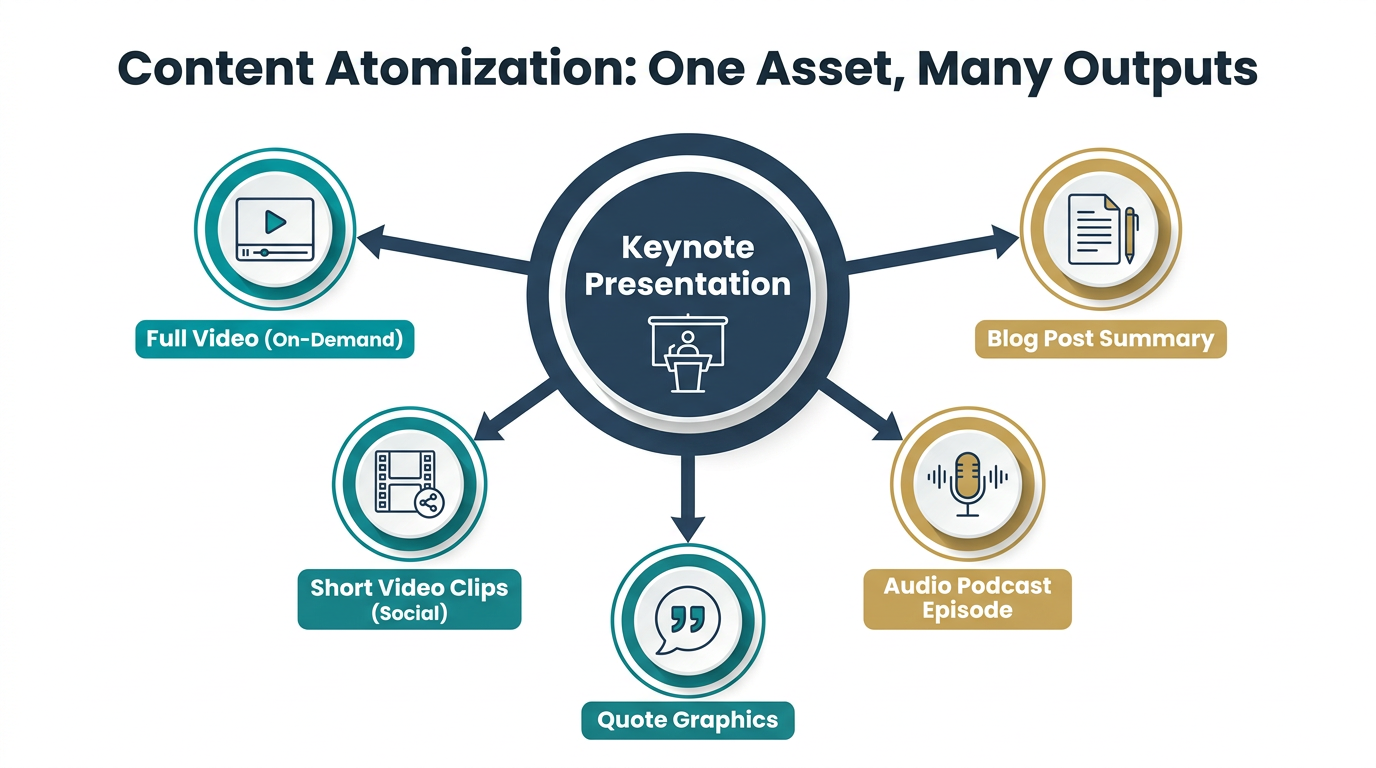
A great way to organize this is with a content matrix. Think of one keynote speech as a central "hub." From that one presentation, you can create dozens of smaller pieces, or "spokes." This method, detailed in The Content Atomization Playbook from BlueText, turns a single asset into many different formats like blog posts or social media clips.
Once you have your new content, create a distribution schedule. Do not post everything at once. Spreading your materials out over weeks or months keeps the conversation alive. Experts at Channel Technologies explain this extends your reach far beyond the original attendees and maximizes the return on your initial investment.
Finally, measure what works. Look beyond simple views. To understand what truly connected with your audience, event industry platform Bizzabo suggests tracking KPIs like session dwell time and speaker ratings. These metrics give you real insight into what content performs best and why.
This data is gold for planning your next event. By seeing which topics and speakers were most popular, you can make smarter decisions for your future content strategy. It creates a powerful feedback loop that makes each event more successful than the last, ensuring continuous improvement for your team.
Real-World Example: Lumenis Medical
Medical technology company Lumenis partnered with Noetic Creative to transform their presence at two major medical conferences into a content goldmine. Their team captured 35 interviews with leading medical professionals, 90+ high-quality photos, and created 60+ social-ready video clips in multiple formats. This strategic approach turned one-time events into weeks of high-performing content, supported by a comprehensive content calendar and retargeting campaigns using event attendee data for ongoing conversions.
The Essential Types of Content to Capture
To get the most from your event, you need to think beyond just recording the main speaker. A rich content library includes different formats that capture the full experience. This means collecting a mix of video, audio, photos, and even written quotes to use in your marketing later.
Start with the core presentations. Full video recordings of your keynote speakers and panel discussions are essential assets. These can be shared as on-demand content for those who missed the event or want to rewatch. They form the foundation of your post-event content strategy.
For the best results, use multiple camera angles to make the final video more dynamic. More importantly, always try to get a direct audio feed from the soundboard. A clean audio track is crucial for creating professional-quality clips that people will actually watch and enjoy.
Do not forget the people. Short interviews with speakers before or after their talk offer exclusive behind the scenes insights. Also, look for happy attendees. A quick video testimonial where they share what they learned is incredibly powerful and authentic marketing material.
Professional photos and B-roll video are important. Capture images of speakers on stage, attendees networking, and the energy of the venue. This footage provides the visual glue for promotional videos, social media posts, and website backgrounds. It helps tell your event's story visually.
When taking photos or videos of crowds, remember legal best practices. To ensure consent, post clear notices at event entrances. As legal experts on event photography explain, these notices serve as implied consent for incidental shots, protecting you later.
Finally, capture key insights in written form. Assign someone to live-tweet memorable quotes from speakers using your event hashtag. You can also have a writer take detailed notes during sessions. These notes can be quickly turned into summary blog posts or articles shortly after the event concludes.
Measuring the ROI of Your Event Content
How do you know if your content capture plan is working? It is not just about counting likes or video views. True success is measured by how your content helps your business grow. This means looking at real results like leads generated and sales influenced by your event materials.
Simple numbers like views are often called vanity metrics. They can look nice, but they do not always tell you the whole story. Instead, focus on business metrics. These answer important questions. How many new leads did we get? Did our sales team use this content to close a deal?
There is a simple way to calculate a return on investment, or ROI. First, figure out the money your new content helped generate. Then, subtract the total cost of creating it. Finally, divide that number by the original cost. This shows you how much you earned for every dollar you spent.
So how do you track where leads come from? The key is using special links with UTM parameters. These add a small bit of code to a regular web link. The code acts like a tag, telling your analytics tools exactly which piece of content brought a visitor to your website.
For best results, send people who click these links to a dedicated landing page. This page should focus on one goal, like a newsletter signup or a product demo. Then you can clearly see how many people converted directly from the specific blog post or video clip you shared.
Connecting your efforts to revenue is critical. As a guide to content ROI from Jasper.ai explains, this tracking proves the value of your work. It helps you show your team that event content capture is a smart investment that directly supports business goals and generates measurable results.
The AI Revolution in Event Content
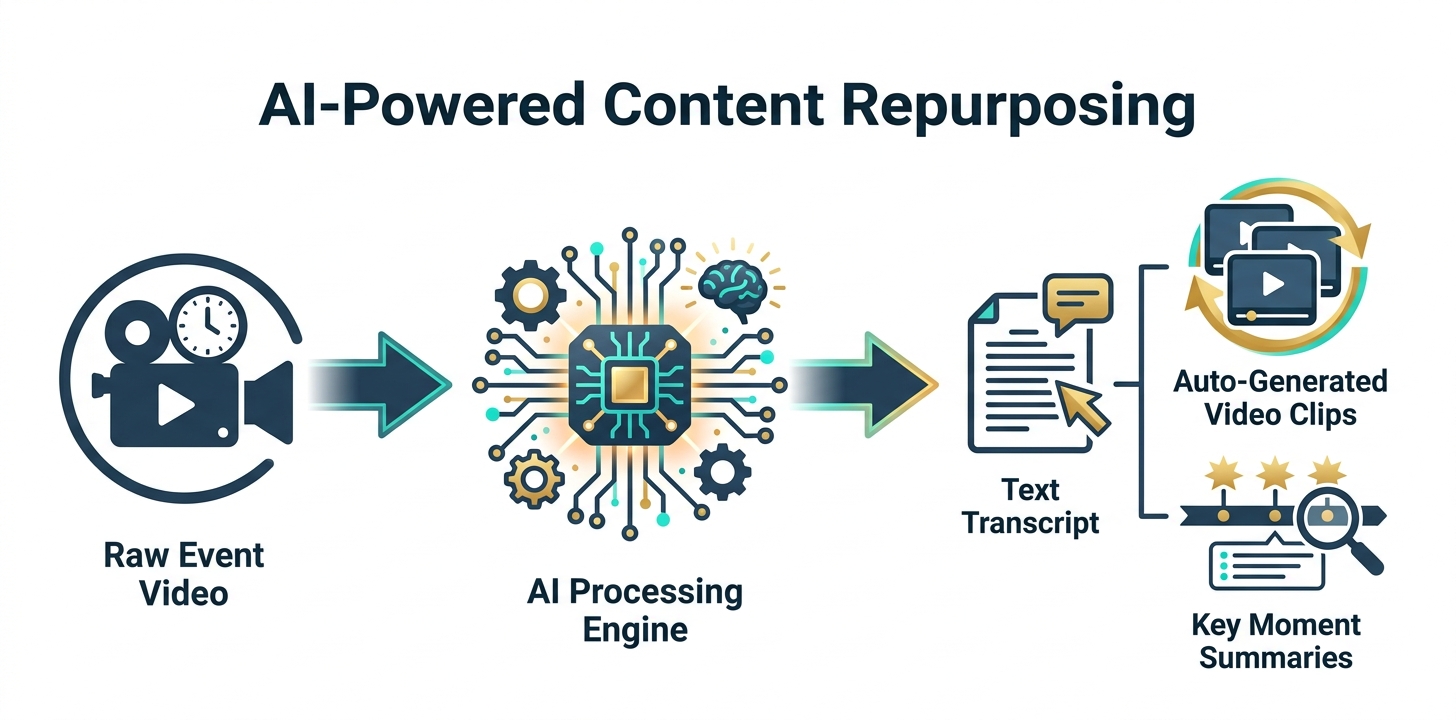
Creating content from your event used to take a lot of time. But new tools using artificial intelligence, or AI, are changing everything. AI helps you repurpose your event content much faster and more easily. This means you can get more value from your recordings without a huge amount of extra work.
Imagine turning a one hour talk into a perfect written summary in minutes. AI tools can do just that. They listen to your video or audio recordings and create an accurate text transcript. Some tools even let you edit the audio just by deleting words from the text, which saves a ton of time.
AI is also great at video editing. Instead of an editor watching hours of footage, AI does the hard work. As detailed in a review of the best AI content repurposing tools, software can automatically find the best parts of a talk. Then it creates short video clips ready for social media.
These smart tools can even analyze the video to see which moments your audience found most engaging. They can look for applause, laughter, or changes in a speaker's tone. This helps your team quickly identify the golden nuggets of content hidden inside long recordings. It guides the editing process with real data.
Many tools now combine these features. For example, some can transcribe a talk, identify key points, and then write social media posts for you. With so many options available, it is smart to check reviews. You can explore a directory of top-rated AI video generator tools on G2 to find the right fit for your team.
Turn Your Event into a Content Goldmine
Viewing your event as a one-time activity is a missed opportunity. Instead, you should see it as a strategic content engine. It's a goldmine of insights, excitement, and expertise. With the right approach, you can turn a single day into months of valuable marketing materials.
This shift in mindset changes everything. The core steps are simple. You need a solid plan with clear goals, a smart capture strategy during the event, and a relentless repurposing process afterward. This method is proven to deliver big results for your business.
In fact, a multi-touch marketing approach that includes post-event content can lead to a significant boost. As the State of Marketing report from Salesforce highlights, this can increase your attributed sales pipeline by 30 to 50 percent. That is a massive return on your original investment.
The best part is that technology makes this easier than ever. You no longer need a huge team to sift through hours of video. AI-powered tools can help you find key moments, generate transcripts, and even create social media clips automatically. This makes content repurposing fast and efficient.
The journey begins with a single step. Take what you have learned and apply it to your next event. Start by creating a simple content capture plan. If you need support building your strategy, learn more about our event marketing services and how we can help you succeed.
Frequently Asked Questions
What is event content capture?
Event content capture is the strategic process of recording media at an event with the explicit purpose of using it for future marketing. Unlike casual photography, it involves intentionally documenting presentations, interviews, and attendee interactions to create valuable assets that can be repurposed across multiple channels.
Why is event content important?
Event content extends the life and ROI of your investment by creating authentic marketing material that engages both attendees and those who couldn't participate. It transforms a single moment into months of valuable assets, increases your attributed sales pipeline by 30-50%, and helps establish your brand as an industry authority.
How do you capture content at an event?
Effective content capture involves hiring a professional team with clear direction, setting up dedicated interview stations for speakers and attendees, encouraging user-generated content with branded hashtags, and recording all main stage sessions with multiple camera angles and high-quality audio feeds.
How do you repurpose event content?
Repurpose event content by editing keynotes into short social media clips, using transcripts to create blog posts, pulling audio for podcast episodes, and creating quote graphics from speakers' insights. A content atomization approach transforms one core asset into multiple formats optimized for different channels and audience preferences.
What are the legal implications of capturing content at events?
To legally capture content at events, post clear signage at entrances stating that entry constitutes consent to be photographed and recorded. For featured individuals or close-ups, obtain signed release forms. For minors, always secure parental consent. These practices protect against privacy, publicity rights, or defamation claims.
How can I encourage attendees to create user-generated content (UGC)?
Encourage user-generated content by creating designated 'Instagrammable' photo opportunities throughout your venue, running contests for the best photos with your event hashtag, and featuring attendee posts on a social media wall during the event. This amplifies reach while creating authentic perspectives of your event.