
Published on: April 16, 2026 | Time to read: 19 min
B2B marketing automation uses software to handle repetitive marketing tasks automatically, freeing teams to focus on strategy and relationships. With 79% of B2B companies now leveraging automation, the technology delivers measurable benefits including increased qualified leads, better analytics, and higher ROI across the complex B2B buying journey.
Key Takeaways
- Marketing automation saves B2B teams 6-22 hours per week on repetitive tasks, allowing them to focus on strategic work and relationship building.
- Companies using automation for lead nurturing see a dramatic 451% increase in qualified leads and clearer ROI measurement.
- A successful automation strategy requires defining SMART goals first, mapping your customer journey, and creating segmented content before selecting technology.
- The most essential platform features include lead scoring, seamless CRM integration, dynamic content capabilities, and robust analytics dashboards.
- Poor data quality, lack of strategy, and sales-marketing misalignment are the top three pitfalls that undermine automation success.
- AI is rapidly transforming automation platforms with predictive analytics, generative content creation, and hyper-personalization becoming core capabilities.
Table of Contents
- The Tangible Benefits of Automating Your B2B Marketing
- Core Features to Look For in a B2B Automation Platform
- Building Your B2B Marketing Automation Strategy From the Ground Up
- Common Implementation Pitfalls and How to Avoid Them
- Structuring Your Team for Automation Success
- The Future of B2B Automation: AI, Data, and Personalization
What is B2B Marketing Automation, Really?
B2B marketing automation simply means using software to handle marketing jobs automatically. Instead of doing repetitive tasks by hand, technology does the work. It's a very popular strategy. In fact, HubSpot's research found that 79% of B2B companies now use automation to connect with customers and help their business grow.
This software automates tasks like sending emails, posting on social media, and managing campaigns. This frees up your team from time-consuming work. They can then spend their energy on creative ideas and building strong customer relationships, which is where humans truly shine and can make the biggest impact for the company.
But business-to-business (B2B) automation isn't the same as what you see in B2C. B2B sales often take months and involve multiple decision-makers. As sales experts at QCommission explain, the focus is on guiding entire accounts through a complex buying journey, not just making one quick, transactional sale.
People often confuse marketing automation with a Customer Relationship Management (CRM) system. Your CRM is the database for customer information. It’s a digital address book that stores contact details and past interactions. It holds the "who" and the "what" about your audience, keeping everything organized in one single place.
Marketing automation software connects to your CRM and acts on that data. The CRM knows who a customer is, while the automation tool knows how and when to talk to them. When they work together, they create a powerful system that helps you nurture leads effectively and consistently over time.
The Tangible Benefits of Automating Your B2B Marketing
It's no surprise that so many companies are using automation. In fact, research from HubSpot shows that many B2B businesses now automate their marketing. They do it because the benefits are clear and measurable. Automating repetitive tasks frees up your marketing and sales teams to focus on what really matters: strategy and building relationships. This is especially true today, with a majority of companies leveraging some form of automation.
The biggest and most immediate win is a boost in productivity. Instead of manually sending emails or updating records, your team can let software handle it. One analysis found that marketing automation can save teams between 6 and 22 hours per week. That’s a huge amount of time that can be reinvested into more creative and strategic work that drives real growth.
Automation also gets you better leads. The B2B sales process is long and complex. Good automation tools help you nurture potential customers with the right information at every stage. This consistent contact builds trust and keeps your business top of mind. The result? Companies using automation for lead nurturing have seen a 451% increase in qualified leads.
But how do you know if your efforts are paying off? Automation provides the answer with detailed analytics. You can track which emails get opened, which links get clicked, and how prospects move through your funnel. This data allows you to measure your return on investment clearly. For example, one manufacturing campaign analysis found an average ROI of $5.44 for every dollar spent.
When you combine these benefits, you get a powerful system for growth. Your team is more efficient, your leads are higher quality, and you can prove the value of your marketing with solid numbers. It’s about working smarter, not just harder.
Real-World Example: Manufacturing ROI
A manufacturing company implementing marketing automation achieved an impressive $5.44 return for every dollar invested in their automation platform. This substantial ROI resulted from improved conversion rates throughout their sales funnel, increased customer lifetime value, and significantly reduced customer acquisition costs. By using automation to deliver targeted campaigns to specific industry segments, they enhanced lead quality and drove measurable sales growth.
Core Features to Look For in a B2B Automation Platform

So, you're ready to explore automation. But with so many options, how do you pick the right one? The key is knowing which features will truly help your B2B business grow. A good platform goes beyond just sending emails. It should act as the engine for your entire marketing strategy. Let's break down the must-have features you'll need for success.
At its core, any solid platform needs tools for email marketing and building landing pages. But for B2B, strong lead management is just as important. This includes features like lead scoring and grading. These tools help you automatically identify which leads are ready for a sales call and which ones need more nurturing from your team.
Next, look for advanced capabilities that give you an edge. Features like dynamic content can personalize your messages for different audience segments. Social media integration is also popular. In fact, HubSpot's marketing statistics show social media scheduling and email marketing are the two most automated functions. These save time and keep your brand visible.
An automation tool should never be an island. It must connect smoothly with your Customer Relationship Management (CRM) system. This native integration ensures that valuable lead data flows directly to your sales team without manual work. This alignment is so important that experts consider seamless CRM integration one of the most critical platform features.
Finally, don't overlook reporting and analytics. How will you know if your marketing works? A good platform provides clear dashboards showing email open rates, click-throughs, and conversion data. This helps you track your efforts, make smarter decisions, and prove the return on your investment to company leaders. It's about data, not guesswork.
When you look for a B2B automation platform, think of it as a complete toolkit. It should have the essentials for daily tasks, the advanced features for smarter targeting, and the integrations to connect everything. Choosing a tool with these core components sets your marketing team up for scalable and measurable success.
Questions to Ask Before Selecting an Automation Platform
- What specific marketing processes are currently taking the most time that could be automated?
- How clean and organized is our existing customer and prospect data?
- What are our specific, measurable goals for implementing automation?
- How well-documented is our customer journey across different segments?
- Is our sales team aligned with marketing on lead definitions and handoff processes?
- What integrations will we need with our existing CRM and other tools?
- Do we have the internal expertise to manage the platform or will we need training?
- How will we measure success and ROI from our automation investment?
- What content assets do we already have that can be used in automated workflows?
- How scalable is the platform as our business and contact database grows?
Building Your B2B Marketing Automation Strategy From the Ground Up

A powerful automation tool is exciting, but it's not a strategy on its own. Your success depends on the plan you build before you even choose software. Experts on technology adoption agree that you should always prioritize strategy before selecting a tool to make sure your efforts align with real business goals.
Stage 1: Define Your Goals and KPIs
What are you trying to accomplish with automation? Vague goals don't work. Instead, use the SMART framework. Your goals should be Specific, Measurable, Achievable, Relevant, and Time-bound. This clarity prevents one of the biggest automation mistakes: launching new tools without a plan.
A strong SMART goal might be: "Increase marketing qualified leads (MQLs) by 20% in six months." This gives your team a clear target to hit. It's a focused objective that automation can directly support. In fact, companies using automation for lead nurturing have seen a stunning 451% increase in qualified leads.
You'll also need to pick key performance indicators (KPIs) to track your progress. These are the metrics that show if your strategy is working. Think about tracking things like lead conversion rates, cost per acquisition (CPA), and the average length of your sales cycle. These numbers will guide your adjustments.
Stage 2: Map Your Customer Journey and Content
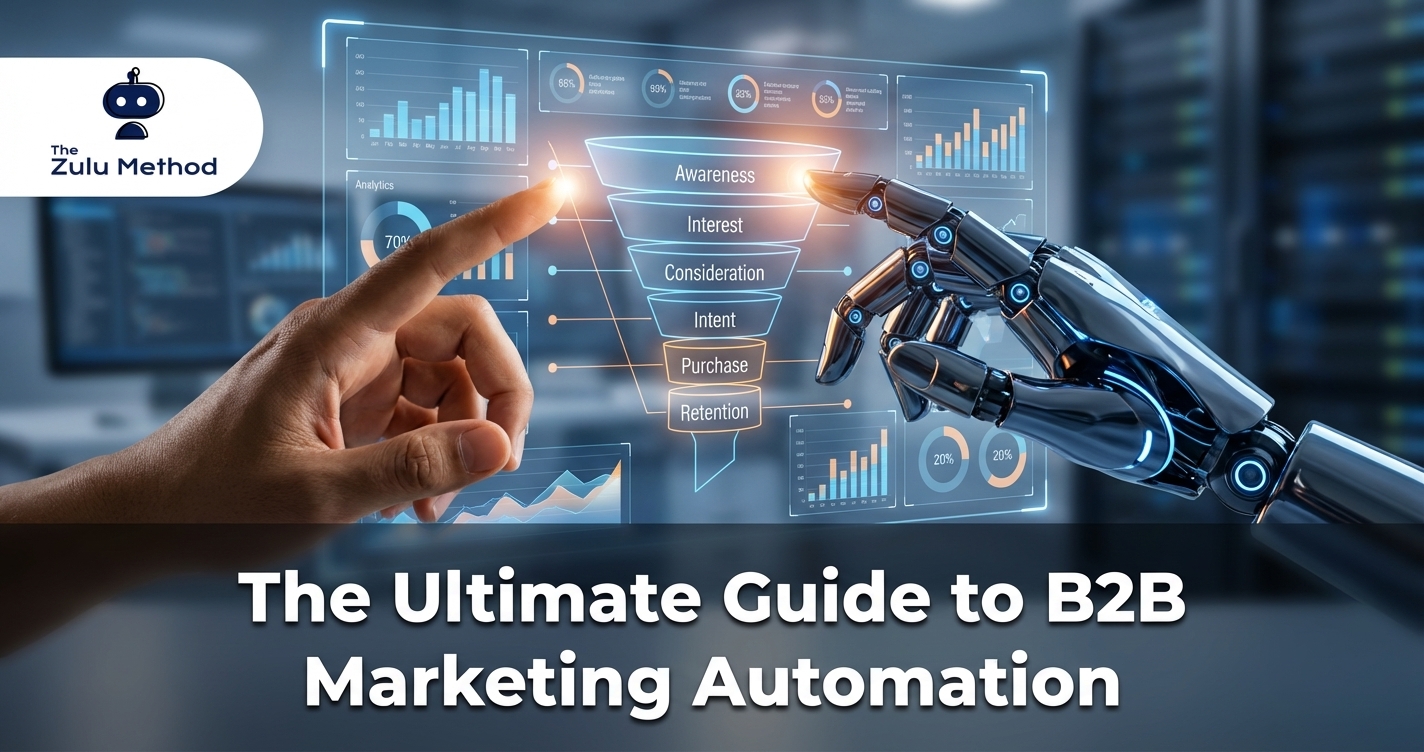
Before you can automate anything, you need a map. This map is your customer's journey. Think about the path they take from first learning about you to becoming a loyal customer. This usually includes an awareness stage, a consideration stage where they weigh options, and a final decision stage. Understanding these steps is key.
Now, match content to each step. Someone in the awareness stage might want a blog post or an infographic. A potential customer in the consideration stage needs more detail, like a case study or a product webinar. This process ensures you deliver the right message at the perfect time, guiding them gently toward a purchase.
Look at the content you already have. An audit will show you where it fits on the journey and reveal any gaps. Aligning your content isn't just a good idea, it's how you stay competitive and make your automation effective from the start.
Stage 3: Segment Your Audience and Plan Workflows
Effective automation doesn't treat everyone the same. You need to segment your audience into smaller groups. Group them by company details like industry or size, also known as firmographics. Or segment them based on actions, like pages they visit or emails they open. A lead score can then rank your most engaged prospects based on these factors.
With your segments ready, you can build automated workflows. These are a series of planned actions. For example, if someone downloads an e-book, you can trigger an email sequence. The first email delivers the content. A few days later, a second email offers a related case study. Finally, a third could invite them to a demo. It all happens automatically.
This is where automation really shines. You send relevant information at the right moment. The result is better engagement and more sales-ready leads. It’s powerful because it works. Reports analyzing marketing automation's impact show lead nurturing can increase qualified leads by an incredible 451%. This step guides prospects effectively.
Common Implementation Pitfalls and How to Avoid Them

While most B2B companies use automation, many struggle to get it right. Simply having the software doesn't guarantee results. Common traps can waste time and money. Knowing these pitfalls ahead of time is the first step toward building a system that actually works.
The biggest mistake is buying tech without a clear strategy. A platform's features can be exciting, but investing before you know your goals leads to underused software. As expert analysis published by Harvard Business Review shows, strategy must come first. Map your customer journey and define objectives before choosing a tool that fits your real needs.
Another pitfall is poor data quality. An automation system is only as good as its data. Using outdated or incorrect information means your campaigns will fail. The impact is significant, as research from Dataversity highlights that organizations lose millions annually from bad data. Always clean your database before you start.
Finally, sales and marketing misalignment can sink your efforts. If the teams don't agree on what makes a good lead, marketing's work gets ignored. This creates friction and lets opportunities slip away. Both teams must collaborate to define lead stages and create a clear handoff process. It turns your system into a true revenue engine.
Structuring Your Team for Automation Success
Buying automation software is just the first step. To truly succeed, you need a smart team structure. With so many companies now using automation, having the right people in place gives you an edge. It’s the difference between owning a powerful tool and actually knowing how to use it effectively to grow your business.
The most successful teams have a dedicated owner for their automation platform. This role is often called a Marketing Operations Manager or Automation Specialist. This person is the expert who understands the system inside and out. They are responsible for making sure the technology delivers real results and runs smoothly day to day.
This specialist handles many important tasks. They develop and execute automated campaigns, from email sequences to lead nurturing programs. As experts at Contentstack explain, this role is key for designing and managing the customer journey within your platform. They turn your marketing strategy into reality.
Data management and reporting are also huge parts of their job. The automation manager ensures the contact database is clean and properly segmented. They also build dashboards and track key metrics. This helps everyone see what’s working, what isn't, and how marketing efforts are impacting revenue.
But this person doesn’t work alone. They must collaborate closely with content creators. The automation specialist needs a steady supply of great emails, blog posts, and landing pages to use in their campaigns. This partnership ensures that marketing messages are consistent, engaging, and delivered to the right people at the right time.
Most importantly, they act as a bridge to the sales team. The automation owner works with sales to define what makes a lead "sales-ready." They build the scoring models and create a seamless handoff process. This alignment is what turns your marketing automation platform from a simple tool into a powerful revenue generator for the entire company.
The Future of B2B Automation: AI, Data, and Personalization
The world of B2B marketing automation is changing fast, and artificial intelligence is leading the charge. Tomorrow's platforms will do more than just send scheduled emails. They are becoming intelligent systems that help you connect with customers in entirely new ways. This shift is already happening, with most marketers preparing for a more data driven future.
Generative AI is a big part of this story. It’s now being used to write email subject lines, body copy, and social media posts. This helps marketing teams create content much faster. And it frees them up to focus on strategy instead of repetitive writing tasks. A lot of companies are planning to invest more in these tools, as Forrester highlights the rapid adoption of generative AI.
AI also gives B2B marketers predictive powers. New tools can analyze data to guess which leads are most likely to become customers. This goes beyond simple lead scoring. The system can also flag accounts that show signs of leaving. This gives your team a chance to reach out and prevent churn before it happens.
This leads to something called hyper-personalization. Instead of sending the same message to a whole segment, AI lets you tailor experiences for each person. It analyzes behavior to understand what an individual prospect cares about. You can then deliver the perfect message at the perfect time. As noted in Gartner's 2025 Magic Quadrant for B2B Marketing Automation Platforms, this level of personalization is becoming a core feature for leading a successful business.
Read much more about Agentic AI & GTM Automation and how you can leverage it in your own GTMs in the Zulu blog: https://blog.thezulumethod.com/
From Manual Effort to a Scalable Marketing Engine
The journey from manual tasks to a powerful automation engine transforms how your team works. We've seen how automation helps find the right customers, nurture leads, and personalize messages. It turns repetitive chores into a system that scales with your business, saving you valuable time and effort. This B2B shift is not slowing down.
But these amazing results don't come from just buying software. Success is a mix of the right plan, the right tool, and the right people. Without a clear strategy, even the best platform will fall short. Focusing on your goals first ensures the technology works for you, not the other way around. People are needed to manage and improve the system over time.
And the effort really pays off. A 2024 survey showed that 69% of marketers see success from the automation they use. When done correctly, automation delivers real, measurable results for your business.
Ready to get started? Don't rush to pick a platform. Instead, take a small first step. Look at your team's current work and find one simple, clear goal. Your mission for the next quarter is just to automate that one process. This small win will pave the way for bigger changes down the road.
Frequently Asked Questions
What is the difference between marketing automation and CRM?
Marketing automation is a marketing tool that manages and automates top-of-funnel activities and lead nurturing workflows, while a CRM is primarily a sales tool that stores customer data and manages relationships. Think of the CRM as your customer database (the "who") while automation is the system that acts on that data (the "how"). They work best when integrated, with automation feeding qualified leads to the CRM for sales follow-up.
How much does B2B marketing automation cost?
B2B marketing automation costs vary widely based on company size, contact volume, and feature requirements. Small businesses can expect to pay $15-$890 per month for basic platforms like HubSpot Starter, while mid-sized companies typically invest $800-$4,000 monthly for more robust solutions. Enterprise-level platforms like Marketo or Salesforce Pardot can cost anywhere from $3,600 to $15,000+ per month, with implementation fees often adding thousands more.
What is an example of B2B marketing automation?
A common B2B marketing automation example is a lead nurturing workflow that begins when a prospect downloads a whitepaper. The automation software immediately sends a thank-you email with the resource. Three days later, it automatically follows up with a related case study. If the prospect clicks on this case study, their lead score increases, and the system creates a task for a sales representative to make personal contact, effectively moving them through the funnel based on their engagement.
Is HubSpot a B2B marketing automation tool?
Yes, HubSpot is one of the most popular B2B marketing automation platforms available. It offers a comprehensive suite of automation tools alongside its CRM, content management system, and service hub. While HubSpot serves both B2B and B2C markets, its robust lead scoring, workflow automation, and sales integration features make it particularly well-suited for B2B companies looking to streamline their marketing processes and nurture leads through longer sales cycles.
What are the main benefits of marketing automation for B2B companies?
The primary benefits of marketing automation for B2B companies include significant time savings (6-22 hours per week on repetitive tasks), dramatically improved lead quality (up to 451% increase in qualified leads through nurturing), better measurement of marketing ROI with detailed analytics, and stronger sales-marketing alignment through integrated processes. Additionally, automation enables consistent communication throughout the lengthy B2B buying journey and provides scalability for growing marketing programs.
How do you measure the ROI of B2B marketing automation beyond just leads?
To measure B2B marketing automation ROI comprehensively, track customer lifetime value (CLV) to assess long-term customer relationships, monitor sales cycle length reduction to quantify efficiency gains, and calculate marketing-influenced revenue by following deals from first touch to close. Additionally, measure operational efficiency through time saved on manual tasks, track cost per acquisition improvements, and assess the quality of customer interactions through engagement metrics and satisfaction scores.
What role does AI play in modern B2B marketing automation?
AI is transforming B2B marketing automation by enabling predictive lead scoring that identifies high-potential prospects based on behavioral patterns, generating personalized content automatically through tools like generative AI, and determining optimal contact timing and channels for each prospect. AI also helps analyze vast amounts of customer data to identify trends and opportunities, automate routine content creation tasks, and provide hyper-personalized experiences that adapt in real-time to customer behaviors.
How long does it take to implement a B2B marketing automation system?
Implementing a B2B marketing automation system typically takes between a few weeks to six months, depending on complexity. Basic implementations with clean data and clear strategies might be operational in 3-4 weeks. Mid-level implementations requiring some data cleanup and workflow design generally take 2-3 months. Complex, enterprise-level rollouts with custom integrations and extensive data migration can extend to 3-6 months. The timeline heavily depends on your data cleanliness, strategy preparedness, and available resources.