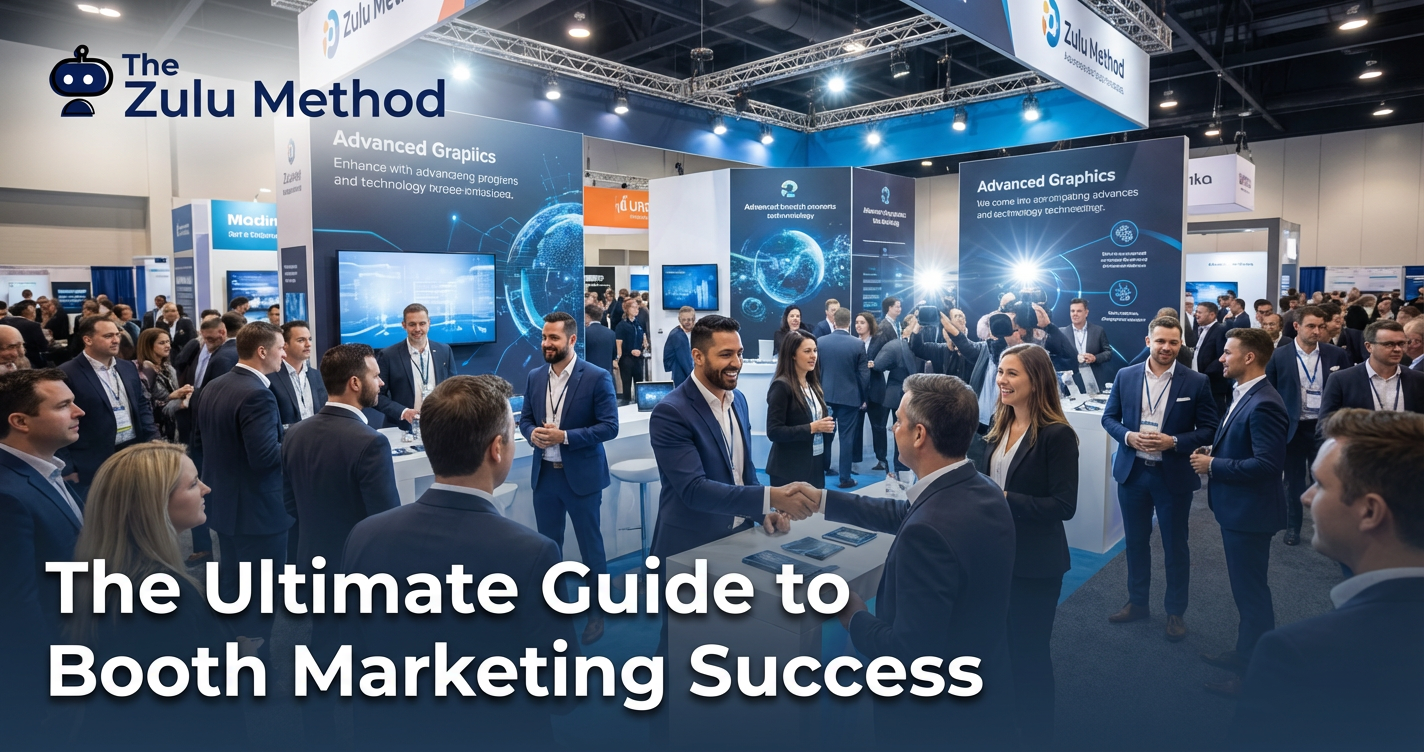

Published on: April 22, 2026 | Time to read: 19 min
B2B Event Marketing success begins with clear goals and continues through strategic booth design, visitor engagement, lead qualification, and diligent follow-up. By focusing on quality interactions rather than quantity of leads, companies can achieve significant ROI through a complete pre-show, during-show, and post-show strategy.Key Takeaways
- Start with SMART goals and meaningful KPIs to align your trade show strategy with overall business objectives.
- Build pre-show momentum through multi-channel promotion including email, social media, and a dedicated landing page.
- Design your booth with open layouts, clear messaging, and interactive elements to maximize engagement and dwell time.
- Train staff to ask quality questions and use modern lead capture tools to qualify prospects during the event.
- Follow up within 24 hours using a multi-touch approach, as 80% of trade show leads never receive follow-up at all.
- Measure both quantitative metrics (leads, revenue) and qualitative benefits (brand awareness, partnerships) for true ROI.
Table of Contents
- Pre-Show Promotion: Building Buzz Before the Doors Open
- Designing a Booth That Demands Attention
- Engaging Visitors and Creating Memorable Experiences
- Mastering Lead Capture and Qualification
- The Post-Show Follow-Up: Where the Real ROI is Made
- Measuring Your True Trade Show ROI
Before You Begin: Defining Your Trade Show Goals and KPIs
Before you even think about booth design or swag, it's important to start with the 'why'. Your trade show strategy should directly support your company's main goals. Are you there to find new customers, build brand awareness, or meet potential partners? Answering this first makes every other decision easier.
Once you know your 'why', you can set SMART goals. This means they are Specific, Measurable, Achievable, Relevant, and Time-bound. Instead of a vague goal like "get more leads," try something concrete. For example, aim to "Generate 150 qualified leads" or "Secure 20 meetings with Director-level prospects."
Next, decide how you'll measure success with Key Performance Indicators (KPIs). These are the specific numbers you'll track. Common an effective KPIs for trade shows include Cost Per Lead, Lead Qualification Rate, and a final tally of revenue that came directly from the event.
Setting clear targets drives results. For example, a multi-touch event orchestration case study showed one company achieved a 300% return on investment by creating a tailored plan. They used a mix of pre-show emails and follow-through to generate 140 qualified leads, proving that clear goals work.
Real-World Example: Multi-Touch Event Orchestration
A B2B company achieved an impressive 300% return on investment by implementing a strategic pre-show and post-show marketing plan. By segmenting prospects and creating tailored incentives for each campaign stage, they generated 140 qualified leads through a combination of event marketing, direct mail, email, and teleprospecting. The key to their success was qualification happening through meaningful conversation rather than just badge scans, demonstrating that clear goals and follow-through deliver measurable results.
Pre-Show Promotion: Building Buzz Before the Doors Open
You can't just show up and expect a crowd. A strong pre-show promotion plan makes sure people are excited to visit your booth before the event even begins. It's about building momentum so that you arrive with a list of interested prospects who are already looking for you. This early effort turns a cold audience into warm leads. For a deeper dive into identifying and engaging qualified prospects before the event, check out our comprehensive guide to pre-event prospecting.
Start by using a mix of channels to get the word out. Your existing email list is a great place to start. Send a series of messages announcing your attendance and what you'll be showcasing. At the same time, use targeted social media ads to reach attendees who may not know your brand yet. Finally, have your sales team do personal outreach to their top prospects.
A dedicated landing page acts as your event headquarters. This page should have all the key details: your booth number, event hours, and who from your team will be there. Critically, include a calendar link so people can book meetings in advance. Tease a new product or an exclusive show offer to create curiosity. A strong online presence matters, as one B2B firm's website redesign doubled its lead conversion rate.
Don't forget to join the online conversation early. Find the official event hashtag and start using it in your social media posts. This simple action gets your content in front of a highly relevant audience. But don't just post. Interact with event organizers, speakers, and other exhibitors. A little engagement goes a long way in boosting your visibility before the doors open.
In fact, research from Leadtail shows that event-specific hashtags are a powerful way to connect with a live audience of industry professionals. By building this early awareness, you make your booth a must-see destination instead of just another stop on the crowded trade show floor. For additional strategies on maximizing your event impact, explore our 14 powerful tips to maximize your B2B event ROI.
Designing a Booth That Demands Attention
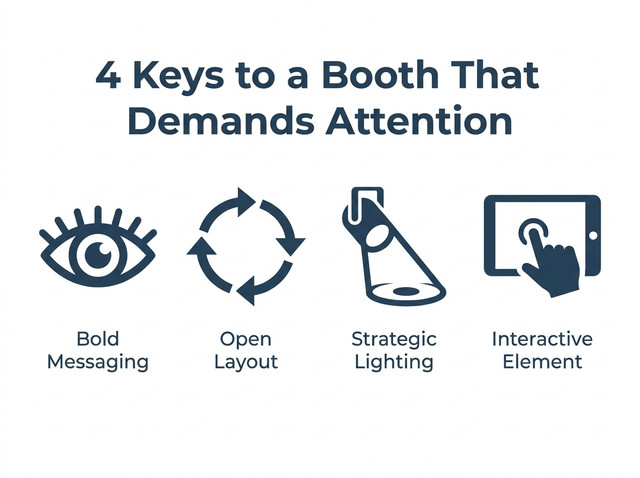
Your booth is your physical storefront for the day. Attendees make snap judgments as they walk the aisles. A well-designed booth doesn't just look good. It acts as a magnet, pulling people in and starting conversations. Your goal is to make your space an experience, not just an exhibit.
The boxy standard isn't the only option, there are some very creative, unique options in the market, you just have to look past the normal providers. San Diego's Flatworks Displays is a one-of-a-kind option that will have you standing out of the pack.
You have about three seconds to grab someone's attention. Your messaging must be bold, simple, and clear. An attendee walking by should instantly understand who you are and what problem you solve. One guide on common exhibit mistakes warns against using busy graphics or too much text. Keep it brief and powerful.
Think about the physical flow of your space. Is it open and inviting? Many exhibitors make the mistake of placing a large table at the front. This creates a wall between you and potential leads. Push tables and counters to the back or side to create a welcoming path for visitors.
And this small change can have a big impact. An effective layout encourages people to step inside rather than just grabbing a brochure and leaving. In fact, research on booth layout strategy shows that thoughtful design can boost qualified leads by up to 50% and keep visitors in your booth longer.
Lighting also plays a huge role in creating the right atmosphere. Poor lighting can make even the best design look dull and uninviting. On the other hand, a Staples Promo guide on impactful booth design notes that strategic lighting can boost visitor engagement by as much as 48%. Use spotlights to highlight key products or messaging.
Beyond lighting, consider the overall look and feel. Use your brand colors consistently, and make sure your flooring is comfortable. Padded flooring can be a welcome relief for tired attendees, encouraging them to stay and chat. These details combine to create a professional and memorable micro-environment that stands out on a busy floor.
To take engagement to the next level, add an interactive element. Simple games can be incredibly effective. For example, one Adact case study showed how a company used a custom game on a small 2x2 meter booth to attract marketing specialists and maximize interactions. It gives people a fun reason to stop and talk.
The Psychology of an Irresistible Booth
Understanding how people think is your secret weapon on the trade show floor. Have you ever felt overwhelmed by too many options? This is called the 'paradox of choice.' A booth with too many messages or activities can make attendees feel confused. This feeling often causes them to walk away. Instead, focus on simplicity.
Give visitors one clear thing to do. It could be a single, interesting game or a straightforward path to your main demo station. This focus makes your booth more approachable. In fact, reports on booth layouts show strategic booth design can drive 30-50% more qualified leads. A clear path guides people and helps you connect with the right prospects.
Next, use the power of social proof. People are naturally drawn to what others find interesting. A booth with an engaged group looks popular, signaling that something valuable is happening. If traffic is slow, you can "seed" the crowd by having your team members chat. This activity creates buzz and attracts real attendees.
Finally, create a curiosity gap. Use signs that ask a provocative question instead of just stating facts. For example, a sign that reads, "What if you could cut reporting time by 50%?" is much more powerful. It makes people stop and think, creating a natural opening for a great conversation.
Questions to Ask Before Finalizing Your Booth Strategy
- Does our booth design clearly communicate our main value proposition within 3 seconds?
- How will we qualify leads beyond just collecting business cards or scanning badges?
- What specific actions do we want visitors to take after visiting our booth?
- How will our pre-show promotion integrate with our booth experience?
- What interactive elements will we include to increase engagement and dwell time?
- How will we train our staff to ask effective questions rather than pitch products?
- What is our follow-up plan for different lead categories (hot, warm, cold)?
- How will we measure success beyond just counting leads?
- What is our strategy to stand out from similar exhibitors in our category?
- How will we capture the context of conversations for personalized follow-up?
Engaging Visitors and Creating Memorable Experiences
Your team is key. Train them to be welcoming consultants, not passive booth guards. They should stand, smile, and ask open-ended questions to anyone who pauses. Instead of "Can I help you?", try "What's the biggest challenge you're solving this year?" This opens the door to a real conversation.
Think carefully about your giveaways. While cheap pens seem easy, they attract low-quality leads. In fact, research highlighted by getsurfox.com shows that nearly 73% of people exchange their details just for a giveaway, not because they want to buy. This fills your follow-up list with people who aren't interested.
Instead, offer something with real value. This could be a free trial, a high-quality resource, or a unique experience like a professional headshot station. These offers attract visitors who are genuinely interested in what you do. Check out more ideas for promotional items that work.
Technology can turn a passive booth into an active experience. Interactive elements like touchscreen surveys or games capture attention and make learning about your company fun. And it doesn't need to be complex. A simple, well-designed activity can make a big difference.
Gamification is a proven winner. For instance, an Eventmarketer story on Instacart details how a physical Plinko game attracted crowds. You can also use Augmented Reality (AR) to show off complex products. Imagine visitors using their phones to see a 3D model of your machine.
As guides on AR in exhibits explain, this technology makes complicated ideas easy to understand. Using an integrated platform to manage these experiences is smart. Services from event technology leaders like Cvent help you run interactive elements smoothly and capture every lead.
Always push your team to improve and grow. Share a deeper view into some B2B event marketing strategies and executional tactics.
Mastering Lead Capture and Qualification
That old fishbowl for business cards is a thing of the past. Today, success at a trade show is about quality over quantity. Your goal isn't just to collect names; it's to find genuine prospects who are ready to talk business. This means using smarter tools and a clear process to capture and qualify leads right on the show floor.
Modern lead capture apps are your best friend here. Instead of a messy pile of cards, your team can use tablets or phones to scan badges instantly. This gets you clean, accurate data without manual entry. According to reviews on software directories like G2, many apps let you add custom notes or tags right away, which is perfect for remembering important details.
To make the most of this tech, you need a standard way to qualify visitors. Your team should ask three or four simple questions to figure out if a lead is hot, warm, or cold. Think about budget, authority, need, and timeline (BANT). A few quick questions can save your sales team hours of work later.
And this leads to better conversations. In fact, research on strategic booth layouts shows that good design can attract up to 50% more qualified leads. When you have the right people stopping by, you can focus on having meaningful discussions instead of just scanning the badges of uninterested attendees. The right environment invites quality conversations.
Always capture the context of your chat. A note like 'Talked about integrating with their Salesforce' is much more useful than just a name and email. As proven guides on post-show follow-up show, these details make your outreach personal and relevant. This simple step can dramatically increase your response rates after the event ends.
This focused approach generates real results. For example, a multi-touch event orchestration case study from MarketingSherpa highlights a company that achieved a 300% ROI. They did this by tailoring their efforts to segmented prospects. It proves that combining smart capture techniques with a targeted follow-up strategy is the key to maximizing your trade show investment.
Implementing an holistic event marketing system that includes strategic pre, during, and post event lead capture and management is a critical element of B2B Event Marketing success.
The Post-Show Follow-Up: Where the Real ROI is Made

Did you know a huge number of trade show leads go to waste? Astonishingly, research from CEIR shows that 80% of leads are never followed up on. All that time, effort, and budget can disappear if you don't have a plan for what happens after the show. The period right after the event is where your real return on investment is made.
The most important rule is to act fast. Your memory of the conversation is fresh, and so is theirs. You should send your first follow up email within 24 hours of the show ending. Acting quickly makes a big difference. Leads contacted in that first day are significantly more likely to convert into actual business, keeping the momentum from your initial chat alive.
But a single email is not enough. A successful strategy uses multiple ways to connect. Think of it as a friendly campaign that unfolds over a couple of weeks. This approach respects their busy schedule while keeping your company top of mind. People respond to different channels, so covering your bases is just smart.
Combine a personal email with a LinkedIn connection request. A few days later, a sales rep can make a quick phone call. Spreading these touchpoints out creates a natural conversation. This kind of repeatable playbook for event leads shows you're thorough and genuinely interested in their problems. It stops you from getting lost in the post show noise.
Not all leads are the same, so your follow up shouldn't be either. You need to segment your list based on the information you gathered. Was the person ready to buy, just curious, or somewhere in between? This information is gold because it tells you exactly what to do next. It's about working smarter, not harder.
For your "hot" leads, the ones ready for a serious talk, a sales rep should call right away. "Warm" leads who showed interest can get an email with a helpful resource you discussed. And for "cold" leads, they can be added to an email sequence that slowly builds the relationship. This custom approach respects their time and boosts your chances of success.
Measuring Your True Trade Show ROI

So how do you know if your hard work paid off? Measuring your return on investment, or ROI, gives you the answer. It's not just about counting business cards. It's about seeing the real value your company got from the event. This helps you decide where to spend your money next time.
First, you need to add up all your costs. This includes everything from the booth space and design to travel expenses for your team. Don't forget marketing materials, technology subscriptions, and even the cost of your staff's time. Getting a clear picture of your total investment is the first step.
Next, you need a way to track the entire journey of your leads. As explained in a Harvard Business School Online guide, the basic formula is simple. To find your profit, you must connect your event leads in your CRM to the sales they generate over the next several months.
But it's not all about the hard numbers. You should also look at the less obvious wins. These qualitative benefits give a fuller picture of success. Great trade show strategies often combine different efforts, like one multi-touch event orchestration case study that generated an impressive return by thinking beyond just scans.
To get the full story, you have to look at both types of results:
| Quantitative (Numbers) | Qualitative (Value) |
|---|---|
| Number of leads | Improved brand awareness |
| Marketing Qualified Leads (MQLs) | New partner relationships |
| Cost per lead | Gained competitive intel |
| Revenue from closed deals | Positive media mentions |
Looking at both the numbers and the long-term value helps you understand your trade show's true impact. It's the best way to prove the event was worth it and to plan for even better results in the future.
Conclusion: Your Blueprint for Booth Marketing Success
A successful booth marketing strategy turns your booth from a passive space into a lead generation machine. It's not just about showing up. It's a complete process connecting what you do before, during, and after the event to create real business results. This approach ensures your investment pays off.
The secret lies in a simple trifecta: smart planning, smart execution, and dedicated follow-up. Forgetting to follow up is especially costly. In fact, startling industry research shows 80% of trade show leads receive no follow-up at all. This makes a solid post-show plan absolutely essential for seeing a return.
So, where do you begin? For your next trade show, just pick one specific, measurable goal. This could be booking 20 qualified demos or collecting 100 new contacts for your newsletter. Whatever you choose, let it be the one thing that guides every decision you make for the event.
Then, build your strategy backward from that goal. Every choice, from booth design to your pre-show emails and follow-up sequence, should directly support that objective. This focus is what turns a good booth into a great one and helps guarantee a return on your investment.
Frequently Asked Questions
How do you attract visitors to your exhibition booth?
Attract visitors through a combination of pre-show promotion via email and social media campaigns, an eye-catching booth with open layout and clear messaging, and interactive elements like games or demos. Creating curiosity with high-value giveaways rather than generic swag also draws quality prospects who are genuinely interested in your solutions.
What makes a good trade show booth?
A good trade show booth clearly communicates your value proposition within seconds, features an open and inviting layout without barriers like tables at the entrance, uses strategic lighting to highlight key elements, and is staffed by well-trained, engaging representatives. The best booths incorporate interactive elements and facilitate easy lead capture while creating a memorable brand experience.
What's the best lead capture strategy for my B2B event marketing?
Always have a well thought through strategy discussed and agreed on with your Sales leadership and team well before each event. Start your planning at least 4 weeks prior to event kickoff. Implement hard lead targets & goals before the event and make sure all teams are bought in and excited about these targets. Start prospecting weeks before the event. Leverage the event attendee list as soon as you receive it to start your sales and marketing engagement. Book scheduled booth meetings so that you show up with 20-30 pre-booked meetings. Take every advantage of spontaneous booth engagement and make sure you segment and manage real ICP conversations vs. swag collectors and contest sign ups.
Most importantly, stay incredibly close to sales post-event and ensure that lead follow up all the way to closed won or closed lost is as frictionless as possible for your sales team. You can even hold a contest to guarantee that sales stays engaged and working leads well after the event. This will increase lead, pipeline, and revenue attribution for your events.
How do you measure a successful trade show?
Success should be measured against your initial goals using specific metrics like the number and quality of leads generated, cost per lead, meetings booked, and ultimately the revenue generated from event leads. A comprehensive measurement approach includes tracking lead progression through your sales pipeline and calculating the final ROI by comparing total costs to the revenue generated from show-sourced leads.
How much should I budget for a trade show booth?
A common rule of thumb is to budget approximately three times the cost of your booth space. For example, with a $10,000 booth space, plan for around $30,000 total to cover design, construction, travel, accommodations, marketing collateral, and other expenses. This ratio can vary based on your industry, the specific show, and your company's objectives.
What are the best types of giveaways for a B2B audience?
The best B2B giveaways provide genuine value beyond cheap trinkets. Consider digitally valuable items like e-books, templates, or extended software trials; experiential offerings such as professional headshots or VR demos; or high-quality physical items relevant to your industry, like premium notebooks for consultants. Valuable giveaways attract serious prospects rather than swag collectors.
How many staff members do I need for my booth?
A general guideline is one staff member for every 50 square feet of booth space. For a standard 10x10 (100 sq ft) booth, two people at a time is ideal, allowing one person to engage in conversation while the other welcomes new visitors or manages lead capture. Always schedule extra staff to allow for breaks and peak traffic periods throughout the day.