
Published on: May 7, 2026 | Time to read: 21 min
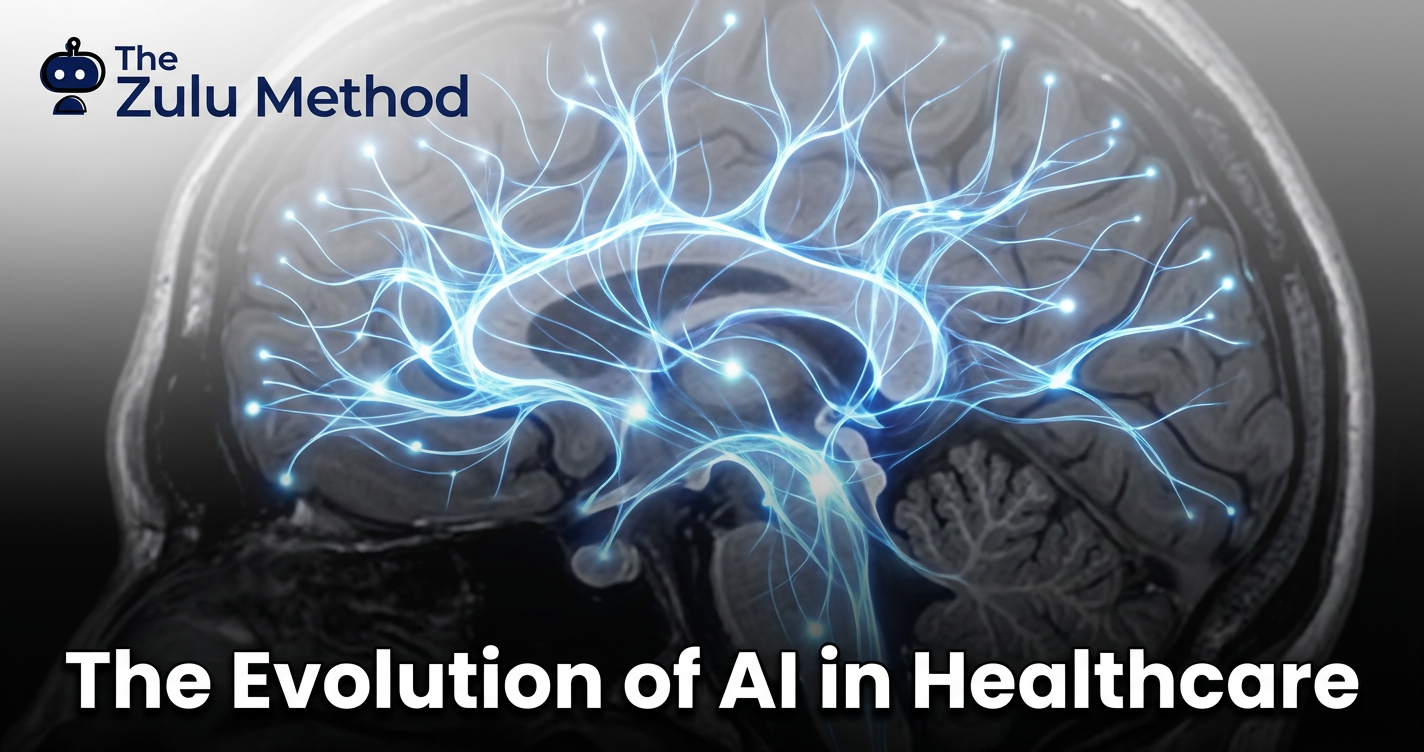
The evolution of AI in healthcare has transformed from simple rule-based programs to sophisticated deep learning systems that assist with diagnostics, personalized treatment, and operational efficiency. This technology is becoming an essential tool for medical professionals, enhancing accuracy and improving patient outcomes through early detection and data-driven insights.
Key Takeaways
- AI in healthcare has evolved from basic rule-based systems to advanced deep learning models that can analyze complex medical data like images, genetic sequences, and patient records.
- Diagnostic applications show significant improvements, with AI achieving high sensitivity in detecting conditions through medical imaging, pathology analysis, and symptom evaluation.
- AI enables more personalized treatment plans through genetic analysis, optimizes radiation therapy protocols, and enhances surgical precision through robot-assisted procedures.
- Healthcare operations benefit from AI through smart scheduling, automated billing, and resource optimization, showing ROIs between 300-750% for specific implementations.
- Ethical challenges including patient privacy, algorithmic bias, and liability questions must be addressed to ensure AI serves all patients equitably and safely.
- The future of AI in healthcare points toward preventative care, with systems that integrate diverse data sources to predict and prevent health issues before they develop.
Table of Contents
- Diagnostic Applications of AI
- Medical Imaging Breakthroughs
- Treatment and Care Applications
- Administrative and Operational AI
- Ethical Considerations and Challenges
- Future Directions and Emerging Applications
The Evolution of AI in Healthcare
The evolution of artificial intelligence in healthcare has been a journey from simple rule-based programs to complex deep learning models. These advanced systems now help doctors with tasks like diagnosing diseases from images and personalizing patient treatments. This technology is quickly becoming a key part of modern medicine.
AI in medicine began with 'expert systems' in the 70s. These early programs used if-then rules to copy a doctor's logic. While groundbreaking, they were rigid and could only handle specific problems. They were a simple but important first step.
The next change was machine learning. Instead of following programmed rules, these systems could learn directly from data. By analyzing thousands of patient records or images, they started spotting patterns. This ability to learn on their own opened up many new possibilities.
Today, healthcare AI uses deep learning, an advanced machine learning type. These models understand very complex data, like genetic sequences or detailed scans. This lets AI perform tasks once thought only for humans, from reading X-rays to predicting patient risk.
A huge breakthrough is in diagnostics. AI tools analyze medical information with impressive accuracy. A multicenter study published in JAMA found that AI assistance improved physicians' diagnostic accuracy by up to 4.4%. This shows AI can be a valuable partner for doctors.
Traditional healthcare relies on a doctor's training and experience. AI can process huge datasets without fatigue, offering a different strength. But working together isn't always simple. A study shared by UVA Health found AI can speed up work, but accuracy gains vary greatly.
This technology is now in active practice. Top hospitals are using AI every day. UC San Diego Health reports that institutions like Mayo Clinic manage hundreds of AI projects. These efforts boost patient safety and streamline hospital operations.
Ultimately, these advances improve patient outcomes. Spotting diseases sooner means starting treatment earlier, which is critical for many conditions. As the World Economic Forum discusses, analyzing data with AI leads to more personalized and effective care plans in fields like oncology.
The journey of AI in healthcare is far from over. What began as simple programs has grown into a powerful assistant for medical professionals. As the technology integrates into daily workflows, it is becoming a standard tool that helps deliver better care for everyone.
Diagnostic Applications of AI

Artificial intelligence is a powerful new helper for doctors. It acts like a second set of eyes, analyzing complex medical data to find clues about diseases. This support can lead to faster and more accurate diagnoses for many patients. The main goal is to catch health problems sooner.
Medical imaging is a top area where AI makes a difference. Algorithms can scan X-rays, MRIs, and CT scans to spot issues that humans might miss. For example, AI can detect very early signs of strokes or tumors. This technology is quickly changing how radiologists work every day.
AI systems often show higher sensitivity in reading these scans. Research published by the National Institutes of Health highlights this fact. In some studies, AI's ability to spot cancer reached over 95 percent, a rate that can surpass typical human review. This level of detail can be truly life-saving.
Beyond just imaging, AI also assists with pathology and lab work. It can review digital slides of tissue samples to help find cancer cells faster. It also analyzes laboratory tests. For instance, AI tools have shown 93% accuracy in reading electrocardiograms (ECGs) to spot heart problems.
Another key application is helping with the diagnosis itself. AI can take a patient's symptoms and medical history and suggest possible conditions. This supports doctors in creating a list of potential diseases to consider. It works like a smart assistant that offers helpful ideas.
Some advanced AI models are surprisingly accurate on their own. Stanford's Institute for Human-Centered AI reported that one AI model reached 92% accuracy on complex clinical problems. This shows the standalone potential of these tools, even though they are meant to assist doctors.
Here is how AI contributes to different diagnostic areas:
| Diagnostic Area | How AI Helps | Example Finding |
|---|---|---|
| Medical Imaging (X-rays) | Finds subtle patterns for early detection | Improved sensitivity in finding tumors |
| Pathology (Biopsies) | Identifies abnormal cells on digital slides | Speeds up the review process for pathologists |
| Lab Tests (ECG) | Analyzes data signals for abnormalities | High accuracy in detecting heart issues |
| Symptom Analysis | Suggests diagnoses based on patient input | Creates a list of possibilities for doctors |
Health systems are already putting this technology into practice. For instance, the American Medical Association shares how Baptist Health integrates AI to improve diagnostics and treatment plans. This moves AI from research labs into real patient care settings, showing it is ready for daily use.
Because this field is growing so quickly, proper training is essential. Top institutions are creating special programs for medical leaders. Stanford Medicine now offers a course on AI strategy to help hospitals use these tools responsibly and effectively. This ensures AI is rolled out safely for patients.
The use of AI in diagnostics is not about replacement, but about collaboration. These tools give doctors powerful new abilities to see more, act faster, and provide better care. As the technology continues to improve, it will become an even more standard part of the diagnostic process.
Medical Imaging Breakthroughs
Deep learning, a powerful type of AI, is making big waves in medical imaging. Radiologists who read X-rays, CT scans, and MRIs are getting new tools to help them. These AI systems are trained on millions of images. They learn to spot patterns that might signal a disease, acting as a helpful assistant.
One of the biggest benefits is finding diseases like cancer much earlier. AI-powered computer vision can analyze scans and highlight tiny, suspicious areas a human eye might overlook. This early detection is very important for successful treatment. It can give patients a much better chance for a positive outcome.
These systems are becoming very accurate. For example, a recent paper on deep learning in medicine shows that certain models can identify skin cancer with over 86% accuracy. By quickly processing images and noting potential issues, AI gives doctors more information to make a final diagnosis and create a treatment plan.
AI in imaging does more than just find problems. It can also perform automated measurements. This includes calculating the exact size of a tumor or the volume of an organ. This information is critical for tracking how a disease is progressing over time or how well a treatment is working.
Getting these tools into hospitals is not always easy. They must connect with existing radiology software and workflows without causing delays. There is also a cost to consider. In fact, one case study on ROI in AI implementation showed a radiology AI project could require a significant investment. This highlights the planning needed for successful adoption.
Real-World Example: Mayo Clinic
Mayo Clinic stands at the forefront of healthcare AI implementation, managing over 200 AI projects across 16 hospitals and 50 clinics. They've established dedicated AI infrastructure including a Research Department for AI and Informatics, Center for Digital Health, and Mayo Clinic Platform. Their multidisciplinary teams of data scientists and clinicians use AI/ML to derive insights from patient data and develop new diagnostic tools and treatment protocols.
Treatment and Care Applications

Beyond just finding diseases, artificial intelligence now helps doctors treat them. AI is creating smarter, more personalized care plans for every patient. It does this by looking at huge amounts of information to find the best path forward. This helps shift healthcare from a one-size-fits-all model.
One of the most exciting areas is personalized medicine. AI systems can look at a person's unique genetic information. By analyzing complex DNA data, they can help predict which treatments will be most effective. This allows doctors to move away from a trial-and-error approach.
This level of detail was once impossible. AI can find patterns in genetic code to match patients with the right therapies. This is changing oncology, as cancer treatments can be tailored to a tumor's biology. As new laws get put in place, like the ones discussed in a 2026 healthcare AI regulatory landscape overview, making sure these recommendations are transparent becomes key.
AI also plays a key role in optimizing treatment protocols. For conditions like cancer, radiation therapy requires extreme precision. AI algorithms can design a treatment plan that targets cancer cells while protecting nearby healthy tissue. This creates a safer and more effective therapy schedule.
Companies at the forefront of medical technology are developing these tools. For example, in radiation oncology, it is important to ensure AI models are fair and accurate. As discussed by experts at Accuray, a medical device company, a major focus is on identifying and removing bias to create trustworthy AI systems for treatment planning.
Care does not stop when a patient leaves the hospital. AI-powered remote monitoring is becoming more common. Using data from wearable devices like smartwatches or home sensors, AI can track a patient's health in real time. It looks for subtle changes that might signal a problem, like an irregular heartbeat or a drop in oxygen levels.
This constant watch allows for early intervention. If the AI detects a worrying trend, it can alert the medical team. This quick response can prevent a serious health event and reduce hospital readmissions. This tech also returns value, with reports showing a positive return on investment for AI in healthcare driven by such efficiencies.
In the operating room, AI is a surgeon's new co-pilot. Robot-assisted surgery uses AI to enhance a surgeon's abilities. The AI does not perform the surgery on its own. Instead, it provides real-time guidance, stabilizes movements to reduce tremors, and improves precision. This can make complex procedures safer.
This leads to better results for patients, including smaller incisions, less pain, and faster recovery times. The development of such advanced tools highlights the need for oversight. Federal agencies are actively tracking these advancements, as detailed in Manatt's Health AI Policy Tracker, to ensure new medical technologies are safe and effective before they reach patients.
Here's how AI is assisting in different areas of treatment and care:
| Application | How AI Helps | Patient Benefit |
|---|---|---|
| Personalized Medicine | Analyzes genetic data for drug pairing | Tailored therapies with higher success rates |
| Treatment Planning | Optimizes radiation or chemo dosage | Maximizes effectiveness, less side effects |
| Remote Monitoring | Tracks real-time biometric data | Early warnings of health issues, fewer visits |
| Robot-Assisted Surgery | Enhances surgeon's control and vision | Smaller incisions, faster recovery |
AI's role in treatment and care is not about replacing doctors. It's about providing them with better tools and deeper insights. From creating personalized drug plans to assisting in surgery, AI helps deliver a higher standard of care. The ultimate goal is to make healthcare safer, more effective, and tailored to each person's individual needs.
Administrative and Operational AI
AI in healthcare is not just for patient care. It also works hard behind the scenes to make hospitals run more smoothly. These tools handle key administrative tasks that are important for good patient outcomes. From managing schedules to handling paperwork, AI helps everything operate more efficiently. This frees up doctors and nurses to focus more on their patients.
Smart scheduling is a big win for everyone. AI systems can optimize patient appointments, fill last minute cancellations, and manage operating room usage. They also use predictive analytics to forecast busy times. This helps hospitals make sure enough staff are on duty, which avoids long waits for patients and reduces staff burnout.
Administrative tasks like billing can slow a hospital down. AI helps by automating medical coding and billing processes. These systems read doctor's notes and suggest the right codes for insurance claims. This reduces human errors and speeds up payments. Getting this part of the business right is a major focus for hospital leaders.
These automation tools show a strong return on investment. For example, AI focused on the revenue cycle can improve claim accuracy and cut denial rates. As an analysis of RCM AI highlights, this can generate an ROI of over 300 percent in the first year alone by recovering more revenue and lowering administrative costs.
Of course, these systems are a significant investment. But the savings often outweigh the expense. Specific projects can deliver huge returns by making care more efficient and preventing costly complications. For instance, Emorphis Technologies reports that an AI system for early sepsis detection can have a return on investment between 450% and 750%.
Using AI for hospital operations makes the entire system stronger. When administrative tasks are handled efficiently and resources are managed wisely, the quality of care goes up. This hidden side of AI is just as important as the clinical tools. It builds a better, more reliable healthcare environment for both patients and staff.
Questions to Ask Before Implementing AI in Your Healthcare Organization
- Does this AI solution address a specific clinical or operational problem we've identified?
- How was the AI system trained, and does the training data represent our patient population?
- What evidence exists for this AI's accuracy, safety, and effectiveness?
- How will the AI integrate with our existing workflows and electronic health records?
- What is the expected return on investment, and how will we measure success?
- How will we explain AI-assisted decisions to patients and obtain appropriate consent?
- What safeguards exist to protect patient privacy and data security?
- Who bears responsibility if the AI makes or contributes to an error?
- How will we train our staff to work effectively with this AI system?
- What ongoing monitoring and validation processes will we implement?
Ethical Considerations and Challenges
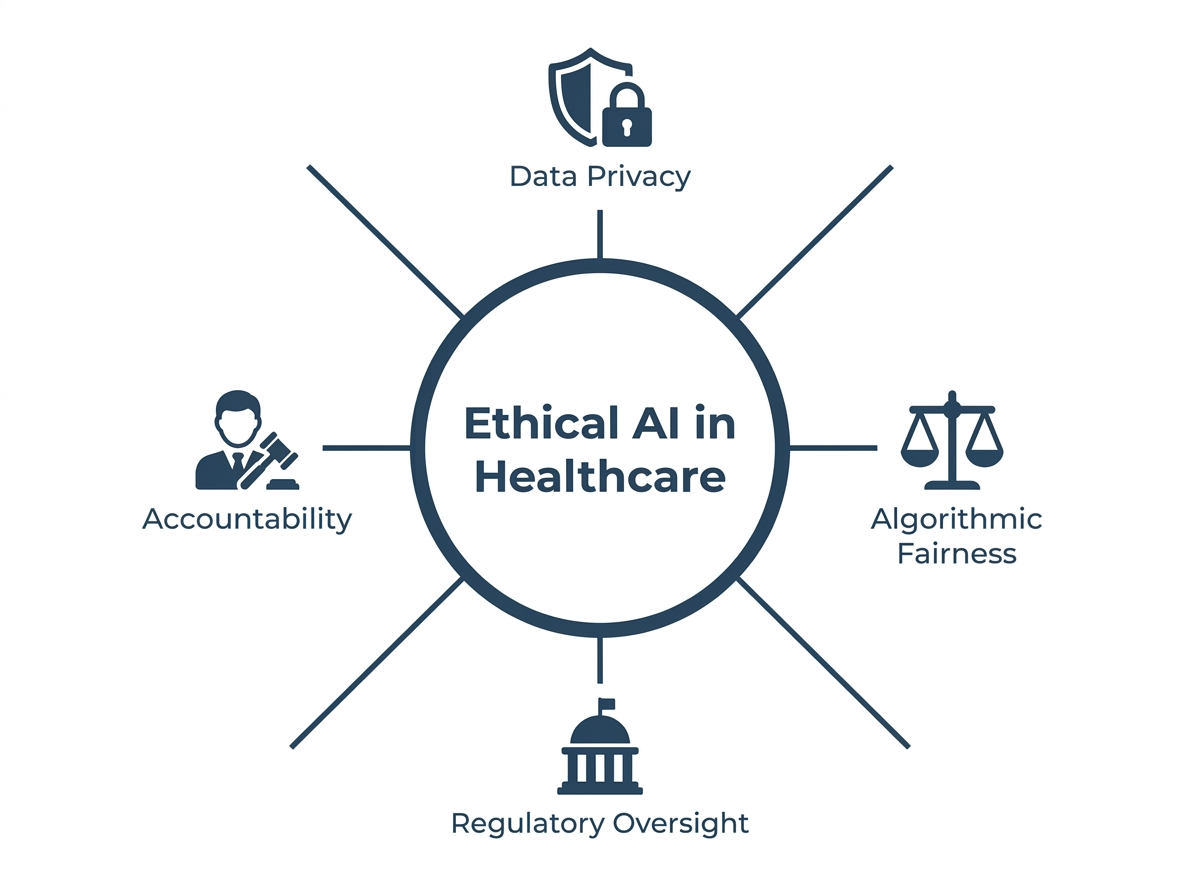
As artificial intelligence grows in healthcare, it brings up important questions. We must think about how to use this powerful technology in a way that is safe, fair, and trustworthy for everyone. These ethical challenges are a big part of the conversation. Solving them is key to making sure AI truly helps patients and doctors without causing new problems.
Patient data is the fuel for healthcare AI, but it is also very sensitive. Protecting this information is a top priority. Hospitals and developers must make sure that private health details are kept secure and are not misused. Following strong data rules is not just about compliance. It builds the trust needed for patients to feel safe when AI is part of their care.
This involves more than just locking data away. As Paubox explains in a discussion on AI bias, strong data governance is critical. This means setting clear rules for how data is collected, used, and documented. It ensures the information is high quality and that its limitations are understood by everyone who uses the AI system.
Another major concern is algorithmic bias. An AI system is only as good as the data it learns from. If the training data comes mostly from one group of people, the AI may not work well for others. This can lead to unfair or incorrect medical guidance for women, minorities, or people in rural areas. This risks making health inequalities even worse.
To fight this, we need to confront our own blind spots. AI models can sometimes reflect the existing biases in our healthcare system. As a report from Harvard Medical School discusses, building fair AI requires diverse developer teams and data that represents everyone. Careful, ongoing testing is the only way to find and fix these hidden biases before they harm patients.
The rules for AI in healthcare are still being written. This creates uncertainty for hospitals and technology developers. There is no single playbook to follow. And many healthcare workers want more guidance. In fact, a Healthcare Brew report notes that 83% of them are looking for more regulation to make AI use safer and more consistent.
Then there is the question of who is responsible. If an AI gives bad advice, who is to blame? Is it the software company, the hospital, or the doctor who followed the suggestion? This is a complex legal and ethical puzzle. For now, the consensus is that AI should be a tool to support doctors, not replace their professional judgment.
Navigating these issues is essential for AI's future in medicine. Building trust with both patients and doctors depends on it. Federal groups are taking notice, with organizations like the HHS exploring safe AI use, as highlighted by a fact sheet from United States of Care. By addressing privacy, bias, and liability head on, we can make sure AI serves humanity.
Future Directions and Emerging Applications
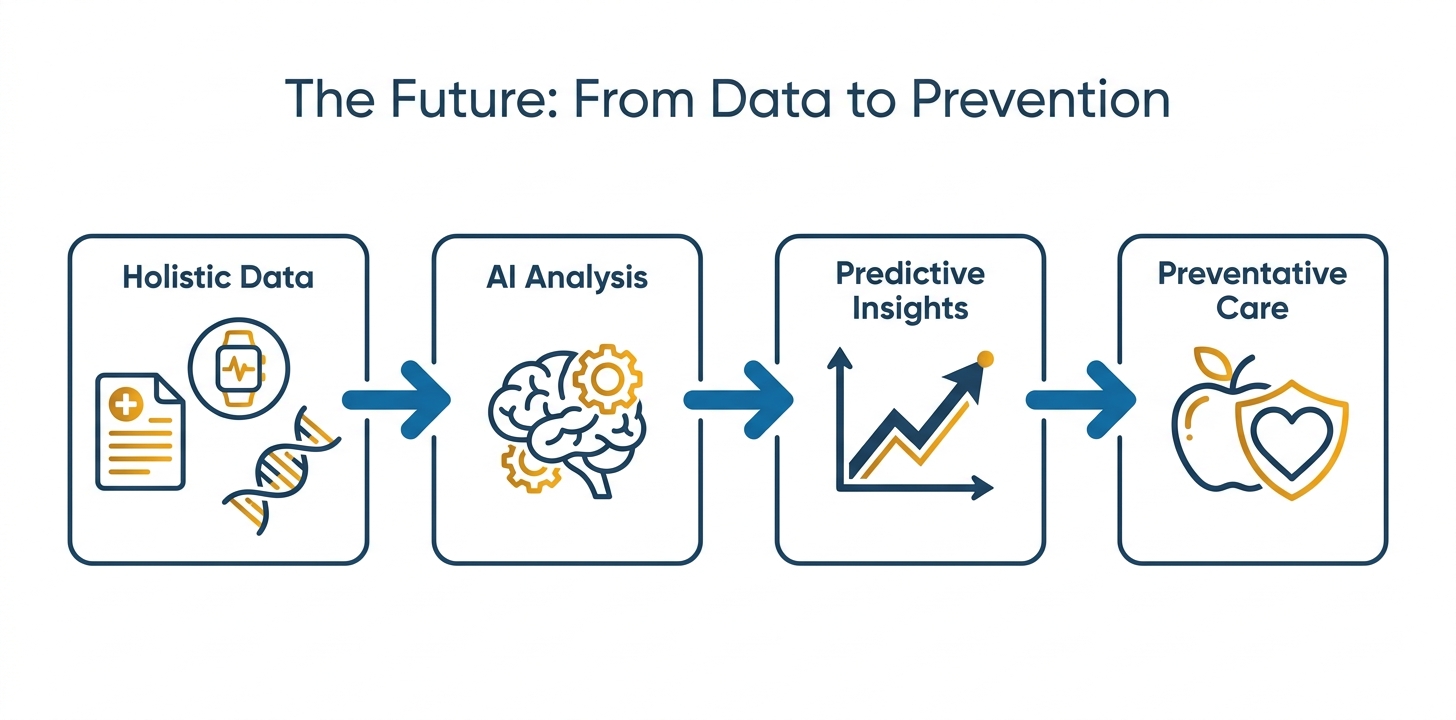
The future of AI in healthcare looks even more amazing. The next wave of technology will focus on preventing sickness, not just treating it. Instead of waiting for problems to appear, AI will work to stop them from happening in the first place. This marks a big shift toward keeping entire communities healthy with smarter tools.
Next-generation AI systems will connect many different sources of information. Imagine an AI that sees your electronic health record, real-time data from your smartwatch, and your genetic profile. It will build a complete, living picture of your health. This holistic view is the key to understanding wellness on a much deeper level than ever before.
With all this data, AI can start to predict health problems. For example, it might see small changes that suggest someone is at high risk for developing diabetes or heart disease years from now. This allows doctors to step in with preventative care, like suggesting lifestyle changes or starting early monitoring. It is all about getting ahead of disease.
This future depends on trust. Doctors need to understand why an AI makes a recommendation. That is why developers are focused on creating explainable AI, or XAI. These systems are designed to be less of a black box. As highlighted in an overview of deep learning for medical computing, making AI's thought process clear is vital for its adoption in real clinical settings.
This technology will also change the role of health professionals. With AI handling data analysis, doctors and nurses can focus more on patient relationships. They will become expert guides, using AI insights to co-create health plans with patients. Human skills like communication, empathy, and complex judgment will become even more valuable in the clinic.
The goal is a healthcare system where AI seamlessly supports human experts. These advanced tools will work quietly to predict risks and suggest optimizations. This frees up providers to deliver the compassionate, person-to-person care that technology can never replace. The future is a partnership between human touch and smart technology, leading to better health for all.
Frequently Asked Questions
Is artificial intelligence more accurate than doctors at diagnosing diseases?
AI demonstrates superior performance in specific diagnostic tasks, particularly pattern recognition in medical imaging, but lacks the contextual understanding and holistic assessment abilities of human doctors. The most effective approach is a collaborative human-AI diagnostic process that combines the strengths of both—AI's processing power and consistency with physicians' clinical judgment and patient context.
How is patient privacy protected when healthcare systems use AI?
Healthcare AI systems implement multiple layers of protection including data anonymization, secure storage systems, strict access controls, and consent requirements. These measures ensure compliance with regulations like HIPAA and GDPR. Ongoing challenges include preventing re-identification of anonymized data and establishing appropriate limitations on data use across different applications.
What types of healthcare jobs might be replaced by artificial intelligence?
Routine administrative roles and repetitive analytical tasks face the highest automation potential through AI. Diagnostic specialties will likely be augmented rather than replaced, with AI handling pattern recognition while clinicians maintain oversight. Patient-facing roles requiring empathy and complex decision-making will remain primarily human, with AI serving supportive functions to enhance care delivery.
How much does it cost to implement AI systems in healthcare?
Implementation costs vary widely based on scale and application, ranging from $50,000-$100,000 for small administrative applications to millions for enterprise-wide diagnostic systems. Return on investment typically requires 2-3 years, with most savings coming from efficiency improvements and error reduction. Targeted applications like sepsis detection can show ROIs of 450-750%.
Can AI help reduce healthcare disparities?
AI has potential both to reduce disparities through standardized care protocols, improved remote access, and resource optimization in underserved areas, and to exacerbate them through biased algorithms, digital divides, and implementation inequities. Intentional design with diverse training data and equitable deployment strategies are essential for creating AI applications that enhance healthcare equity.
What regulatory approvals do healthcare AI systems need?
Regulatory requirements vary by region and application type. In the US, FDA oversight ranges from 510(k) clearance to full premarket approval for high-risk applications, using the Software as Medical Device (SaMD) framework for classification. International standards are still evolving, with some harmonization efforts underway as countries develop AI-specific healthcare regulations.
How are healthcare AI systems trained and validated?
Training typically involves supervised learning on large annotated medical datasets, followed by validation against independent test sets to ensure accuracy. Clinical validation requires prospective studies comparing AI performance to current standards of care in real-world settings. Ongoing monitoring tracks system performance post-implementation to identify and address potential issues as they arise.
What healthcare specialties are seeing the most AI adoption?
Radiology leads AI adoption due to standardized imaging data and clear pattern recognition applications, followed by pathology, dermatology, and ophthalmology. Administrative AI is widely implemented across specialties for tasks like scheduling and billing. Emerging applications in psychiatry, emergency medicine, and primary care are gaining traction as the technology matures.