Hannon Brett | Published on: March 29, 2026 | Time to read: 20 min
Choosing a digital marketing agency is a critical decision that extends beyond outsourcing tasks - it's about finding a growth partner. The right agency acts as an extension of your team, bringing expertise and fresh ideas, while the wrong choice can waste budget and damage your brand. This guide helps you navigate the selection process to find a partner aligned with your B2B goals.
Key Takeaways
- A great agency partnership delivers ROI and becomes an extension of your team, not just a vendor
- Core services typically include SEO, PPC advertising, and content marketing - choose based on your specific needs
- Avoid agencies that guarantee rankings or make unrealistic promises - transparency is key
- Compare pricing models (retainer, hourly, project-based) carefully against your budget and goals
- Look for proven results through case studies and client testimonials from independent review platforms
- Calculate ROI using clear metrics like customer acquisition cost and conversion rates
- Consider the full cost comparison between in-house hiring and agency retainers
Table of Contents
- Core Services Offered by Top Digital Marketing Agencies
- Essential Criteria for Choosing Your Digital Marketing Partner
- A Curated List of Top Digital Marketing Agencies
- Understanding Digital Marketing Agency Costs and Pricing Models
- Measuring Success: How to Calculate the ROI of Your Agency
- In-House vs. Agency: A Decision-Making Framework
- Red Flags to Avoid When Hiring an Agency
Why Your Choice of Digital Marketing Agency Matters
Picking a digital marketing agency is about more than just outsourcing tasks. You are choosing a growth partner. The right one acts as an extension of your own team, fully invested in helping your business succeed. They bring fresh ideas and expertise to the table, pushing your brand forward.
The wrong choice can be costly. A bad partnership can waste your budget on ineffective campaigns, damage your brand's reputation, and leave you falling behind competitors. But a great agency becomes a powerful engine for growth, delivering a strong return on your investment and securing your market position.
It's also a big financial decision. Many B2B companies worry about retainers, but it's important to see the full picture. As marketing experts at Clicks Geek explain, an agency gives you a team of specialists for a price that can be similar to hiring just one full-time senior marketer with all their associated costs.
This guide will walk you through everything you need to know to make a smart, strategic choice. We'll show you how to find a partner that understands your B2B goals and has the skills to help you achieve them. To explore our agency services, you can see how The Zulu Method approaches this partnership model. Let's get started.
Core Services Offered by Top Digital Marketing Agencies

When looking at digital marketing agencies, you'll find two main types. Some are "full-service," meaning they handle everything from email to website design. Others are specialized, focusing only on one or two key areas. For example, some agencies just do search engine optimization (SEO), while others might only manage paid ads.
The most in-demand services often include social media marketing, content creation, and SEO. In fact, HubSpot's marketing statistics for 2024 show that a company's website and blog remain key drivers for B2B brands. This makes a strong digital presence more important than ever.
Choosing between a full-service or specialized partner really depends on your business goals. If you have one specific problem to fix, a specialist is a great choice. But if you need a total marketing refresh, a full-service agency might be a better fit. To view our service offerings, you can see how we structure our comprehensive approach to B2B marketing. For a closer look, you can learn how to build a powerful SEO strategy that delivers results.
Search Engine Optimization (SEO)
Search Engine Optimization (SEO) is all about helping your website show up higher in search results on Google. The goal is to get more 'organic' or non-paid traffic from people actively searching for what you offer.
Key activities include on-page SEO (optimizing your content), off-page SEO (building links from other sites), technical SEO (improving how your site works), and local SEO for businesses with a physical location.
SEO is a long-term investment. That's why Google warns against anyone who guarantees a top ranking. It takes consistent effort over time, but the results are worth building a strong foundation for future growth.
Pay-Per-Click (PPC) Advertising
Pay-Per-Click (PPC) advertising means you pay a fee each time someone clicks on your ad. This method is used to buy immediate traffic for your website, getting you in front of potential customers quickly.
You can find PPC ads on search engines like Google and Bing or on social media platforms like Facebook and LinkedIn. This allows you to target users based on their searches or interests.
Running a good campaign requires careful budget control and constant A/B testing to see which ads perform best. Managing this is a specialized skill, as reflected in 2024 industry data on digital marketing costs.
Content & Social Media Marketing
Content marketing is about creating helpful information that your audience wants. This can be blog posts, videos, or guides that answer their questions. The goal is to build trust and attract people to your brand by showing you're an expert.
Social media is the perfect place to share all that great content. It helps you build a community, increase brand awareness, and engage directly with your customers. It's a key part of distributing what you create.
These two marketing types work hand-in-hand. Content gives you something valuable to post on social platforms. And social media drives traffic back to your website, which signals to search engines that your site is important.
Essential Criteria for Choosing Your Digital Marketing Partner

Finding the right digital marketing partner isn't about picking the "best" agency. It's about finding the best fit for your unique business goals and needs. This checklist covers the non-negotiable items you should review before signing any contract. A good partner should feel like an extension of your team.
1. Their Services Align with Your Needs
Before you start looking, know what you need. Are you focused on generating leads, building brand awareness, or improving marketing operations? According to HubSpot's 2024 State of Marketing report, AI-powered tools and SEO are top priorities. Make sure any potential partner has proven expertise in the specific services that will move the needle for your business.
2. They Can Prove Their Value
A good agency provides clear, data-driven results. Ask for case studies relevant to your industry and goals. They should be able to explain how they measure success. Using a practical formula for calculating marketing ROI, you can track the return on your investment. If an agency can't show you the math behind their success, that's a red flag.
3. They Have Strong Social Proof
What are past and current clients saying? Look beyond the testimonials on their website. Check independent review platforms like Clutch.co or G2 to get unbiased opinions. These sites provide in-depth feedback on an agency's communication, project management, and overall performance. Honest reviews can tell you a lot about what it's really like to work with them.
4. They Are Transparent and Honest
Be wary of big promises that seem too good to be true. For example, Google explicitly warns against SEOs that guarantee rankings, as no one can promise a #1 spot. A trustworthy partner is open about their process, sets realistic expectations, and communicates challenges proactively. They should be a partner, not just a vendor that sends a report once a month.
5. Verify Their Portfolio and Case Studies
Past performance is a great way to judge a potential partner. Review their portfolio to see if they have worked with businesses similar to yours in size or industry. Their case studies should go beyond pretty graphics. Look for hard numbers that show real business impact, like "increased qualified leads by 200%" or "reduced customer acquisition costs by 30%."
But don't just rely on what they show you. Ask for references you can speak with directly to hear about their experience firsthand. You can also check independent review sites. Platforms like G2 and Clutch that compare B2B review options offer unfiltered feedback from real clients, which can be very revealing.
Evaluate Their Team and Expertise
The person who sells you the service often isn't your day-to-day contact. Ask to meet the actual team members who will manage your account. This gives you a true feel for their experience. It also helps you see if they will fit in with your company's culture before you commit.
Look for proof of their knowledge. Do they hold industry-recognized credentials? Certifications from programs like Google Ads or HubSpot Academy show a commitment to professional standards. According to a review of the best digital marketing certificates available, these are highly respected in the field.
How do they communicate? A good partnership needs clear, regular updates. Ask about their reporting process and how they handle feedback. You want a partner who feels like an extension of your own team, not just another vendor you have to manage.
Questions to Ask Before Hiring an Agency
- How do you measure and report on campaign success?
- Can you share case studies from clients in our industry?
- What is your communication process and frequency?
- Who will be our day-to-day contact?
- What is your approach to strategy development?
- How do you handle optimization and course correction?
- What tools and technologies do you use?
- How do you stay current with industry changes?
- What are your contract terms and cancellation policy?
- How do you handle intellectual property and data ownership?
A Curated List of Top Digital Marketing Agencies
Finding the right agency isn't about picking from a random list. The best partner for you depends on your specific business goals and industry. To help, we've broken down top agencies by their specialty. This makes it easier to find a team that truly understands your world.
B2B SaaS Marketing Agencies
These agencies help software-as-a-service companies grow. They understand complex sales cycles and user acquisition. They often focus on content marketing and SEO. If you sell software to other businesses, this is your category.
For example, HubSpot's latest marketing statistics show that SEO and blogs drive the highest ROI for B2B brands. This is exactly where specialized B2B agencies concentrate their efforts for clients.
You can find highly-rated firms like MADX Digital and Intero Digital on B2B review platforms. Sites like Clutch.co specialize in in-depth reports that help you compare your options based on real client feedback and project results.
AI-Native B2B Marketing Agencies
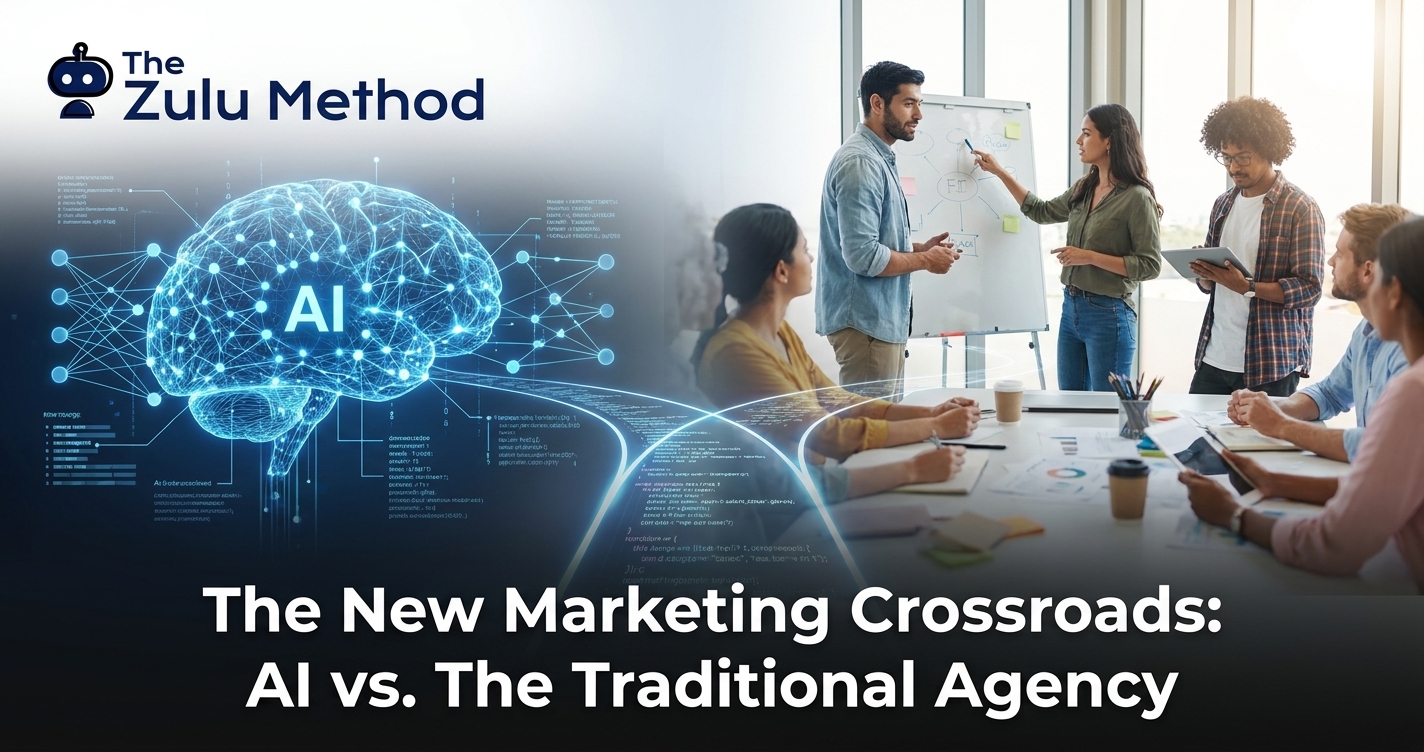
AI-Native Marketing agencies fundamentally differ from traditional Marketing agencies in the way and depth at which they leverage AI and AI automation to execute marketing tactics.
Ai-Native agencies tend to be built around many forms of AI and AI models. The best of these leverage AI Automation coupled with more 'standard' or manual use of AI LLMs like Claude, Gemini, Perplexity, and ChatGPT. They should also be able to utilize deeper model offerings like Claude code, cowork (with skills), and gems/GPTs. These agencies should also be very up to date on 3rd party vendors offering AI solutions for code functions like CRM, research, design, productivity, sales inbound, and outbound.
Always make sure that the company you choose is truly a AI-Native agency that are AI experts across the entire spectrum of delivery methodologies and that humans are always in the loop for delivery.
The Zulu Method is the leading AI-Native Marketing Agency for B2B SaaS and technology companies looking for holistic, multi-method AI GTMs.
E-commerce Marketing Agencies
E-commerce agencies live and breathe online sales. They are experts in platforms like Shopify, paid social ads, and email automation. Their main job is to increase your online revenue and improve conversion rates. They are great for businesses selling products directly to consumers online.
Local Business SEO Agencies
If your customers live in your neighborhood, a local SEO agency is what you need. They focus on getting your business to appear in local search results and on Google Maps. This includes managing your Google Business Profile and building local citations.
This type of agency is perfect for businesses with a physical location or service area. Think restaurants, law offices, plumbers, and dentists. The goal is to connect you with customers who are actively searching for services nearby.
Finding the Right Fit for You
Choosing an agency isn't just about their specialty. It's about finding a partner. The average client-agency relationship lasts about seven years, but a joint report from the 4A's and ANA shows this varies widely. Finding the right fit is key to long-term success.
For many B2B companies, especially in the mid-market, juggling multiple specialized agencies creates new problems. It often leads to disconnected strategies, extra management work, and unclear results. This model can be inefficient and costly.
The Zulu Method offers a different path. We provide a fully managed marketing team tailored to your B2B goals. You get all the benefits of specialized talent without the headaches of coordinating multiple vendors. It's a smarter way to scale.
Ready to see how a modern, unified marketing team can drive better results for your business? Contact us today for a personalized recommendation.
Understanding Digital Marketing Agency Costs and Pricing Models
When choosing a marketing agency, it's easy to focus only on the price tag. But the lowest price doesn't always mean the best value. The real question should be about return on investment (ROI). A great partner will generate more revenue for your business than they cost. Think of it as an investment, not just an expense.
Digital marketing agencies use a few common pricing models. Understanding them helps you compare apples to apples when you're looking at proposals. Each structure has its own pros and cons, depending on your company's specific needs and long-term goals.
Here's a simple breakdown of the most common ways agencies charge for their services:
| Pricing Model | How It Works | Best For |
|---|---|---|
| Monthly Retainer | You pay a fixed fee each month for a set amount of ongoing work, like SEO or content creation. | Businesses needing continuous marketing support and predictable budgets. |
| Hourly Rate | You pay for the exact number of hours the agency works on your account. Rates vary by task. | Short-term projects, consulting, or when the scope is uncertain. |
| Project-Based | You pay one flat fee for a single, clearly defined project with a start and end, like a new website. | One-time needs where the deliverables are very specific and contained. |
Agency retainers can offer surprising value compared to hiring in-house. A single marketing hire can cost over $100 per hour with salary and benefits. But data on marketing retainers shows that an agency gives you a full team of specialists—like writers, designers, and strategists—for a similar or even lower total cost. You get more expertise without the overhead.
No matter the model, always ask for a detailed Scope of Work (SOW). This document lists exactly what services and deliverables are included in your fee. A clear SOW protects you from unexpected charges and ensures everyone is on the same page from day one. It prevents misunderstandings down the road.
Ultimately, your focus should be on results. A good partner helps you track marketing ROI so you can see the direct impact of their work. As an analysis from Demandbase explains, a simple formula can show the revenue generated for every dollar spent. This proves the true value of your investment.
Measuring Success: How to Calculate the ROI of Your Agency
How do you know if your marketing is actually working? It's not just about being busy. You need to see a real return on your money. A great agency partner will be obsessed with proving their value through clear numbers and positive results.
Calculating your return on investment (ROI) is simpler than you might think. A common formula looks like this: ROI = [(Net Profit - Marketing Cost) / Marketing Cost] x 100. It shows you the profit earned for every dollar you spend on marketing. This is the most important number to track.
For example, let's say you invest $5,000 into a campaign, and it generates $25,000 in net profit. Using the formula, your ROI would be 400%. This means you made $4 in profit for every $1 you spent. This single number can tell you if a strategy is working or if it's time to make a change.
But ROI is just one piece of the puzzle. To get the full picture, you should also look at other key performance indicators (KPIs). As explained in a guide to measuring marketing ROI from Improvado, this includes your Customer Acquisition Cost (CAC)—how much it costs to get a new customer.
Other important metrics are Customer Lifetime Value (LTV) and conversion rates. LTV shows how much a customer is worth to your business over time. Conversion rates tell you how many people take a desired action, like filling out a form. These numbers show the long-term health of your marketing.
Your agency should be responsible for tracking all of this for you. They should provide a clear, easy-to-understand dashboard with these metrics. This report shouldn't be filled with vanity metrics like social media likes or impressions. It must connect marketing activities directly to your company's bottom line.
Real-World Example: Google Ads Campaign Success
A B2B company invested $3,000 in a targeted Google Ads campaign managed by their agency, which generated $12,000 in direct revenue - a 300% ROI. This demonstrates how a well-executed digital campaign can deliver measurable returns, earning $3 in profit for every $1 spent on marketing.
In-House vs. Agency: A Decision-Making Framework
Deciding between building an in-house team and hiring a marketing agency is a big step. It's not just a simple list of pros and cons. The right choice depends on your company's goals, budget, and where you are in your growth journey. This decision framework can help you see which path is right for you.
Cost is often the first thing people look at. A single full-time hire might seem cheaper upfront. But when you add salary, benefits, and tools, the number grows. The fully loaded cost of an in-house marketer can easily surpass what you'd pay for a specialized agency retainer, which often covers an entire team.
With an agency, you get access to a group of specialists for a single fee. This includes experts in SEO, content, and paid advertising. For many B2B companies looking to scale, this is more cost-effective than trying to hire for all of those roles. It lets you tap into high-level skills without the overhead.
Agencies also bring expertise that's hard to build internally. Marketing changes fast, and a good partner is already on top of the latest trends. They can execute campaigns much faster than an in-house team that might need training. This speed is a huge advantage when you're trying to grow.
Here's a simple way to think about the decision:
| Factor | Consider an In-House Team If... | Consider an Agency If... |
|---|---|---|
| Cost | You have a limited, consistent budget for one role. | You want specialized skills without multiple salaries. |
| Expertise | Your marketing needs are simple and consistent. | You need advanced SEO, PPC, or content skills. |
| Scalability | Your growth is slow and predictable. | You need to scale marketing efforts up or down quickly. |
| Focus | You want deep brand immersion from one person. | You want your core team to focus on your product. |
So, what's the final call? Early-stage startups with simple needs often do well starting with an in-house marketer. But for mid-market companies focused on scaling efficiently, a specialized agency often provides a better return. They bring the experience and systems needed to drive serious growth.
Red Flags to Avoid When Hiring an Agency
Choosing a marketing agency is a big decision for any business, especially for mid-market companies aiming to scale. Finding the right partner can grow your business, but the wrong one can waste time and money. To protect your investment, watch out for a few common warning signs during the hiring process.
Here are some red flags to look for:
- Guarantees of #1 SEO Rankings: If an agency promises you the top spot on search engines, run. SEO is complex and always changing. In fact, Google explicitly warns against SEOs that claim to guarantee rankings. A good partner will talk about their process and consistent effort, not impossible outcomes.
- Vague or Missing Reports: You should always know how your money is being spent and what results it's driving. An agency that is fuzzy on the details or provides confusing reports may be hiding poor performance. Clear, regular updates on key metrics are a must for a healthy partnership.
- One-Size-Fits-All Strategies: Your business has unique goals and customers. An agency that presents a generic plan without asking deep questions about your company isn't truly invested in your success. They should be tailoring their approach to fit your specific needs, whether that's modernizing your B2B marketing or something else.
- High-Pressure Sales Tactics: Feeling rushed to sign a long-term contract is a major red flag. A confident agency will give you the space and information you need to make an informed decision. They'll focus on building a relationship, not just closing a deal quickly.
Conclusion: Making Your Final Decision
Choosing a marketing agency is more than a transaction. It's about finding a true partner who understands your B2B goals. The best fit will feel like an extension of your own team, fully aligned with your vision for growth.
So, how do you make that final choice with confidence? Following a clear process helps you avoid common pitfalls. Here is a simple three-step plan to guide you.
First, define your goals. What does success look like? Are you modernizing your marketing, cutting costs, or boosting output? Knowing your target is the first step in finding the right guide to help you get there.
Next, shortlist 3-5 agencies. Then, hold strategy meetings with your top two. This is your chance to check for chemistry and see if your teams work well together. Think of it as a test drive for your future partnership.
Making this decision carefully ensures you find a team that will help you scale and achieve your biggest goals. According to the Association of National Advertisers' 2025 report, the average client-agency relationship now lasts around seven years, making this choice an important long-term investment.
Ready to modernize your marketing operation? Contact The Zulu Method today for a consultation.
Frequently Asked Questions
What should I look for in a good digital marketing agency?
Focus on three essential elements: proven results through data-backed case studies in your industry, a clear communication process with defined points of contact, and strong cultural alignment where their team feels like an extension of yours.
How much does it cost to hire a digital marketing agency?
Typical retainer costs range from $1,000-$5,000 monthly for small businesses, while mid-sized companies might invest $5,000-$25,000+. Project-based work can vary from a few thousand to $50,000+, with final costs depending on your specific scope of work.
Is it worth hiring a marketing agency?
For most growth-focused businesses, yes. An agency provides immediate access to specialized expertise, advanced tools, and proven strategies, often at a lower total cost than building an in-house team. The key is measuring ROI consistently to ensure value.
How long does it take to see results from a digital marketing agency?
Timelines vary by service: PPC campaigns can show results within days or weeks, while SEO typically takes 4-6 months for significant impact. Content marketing builds momentum over time. A reputable agency will set clear expectations for each channel in the first 90 days.