
Published on: April 29, 2026 | Time to read: 22 min
A trade show checklist is essential for protecting your investment, preventing costly mistakes, and keeping your team aligned toward success. This strategic roadmap helps manage hundreds of details across six phases, from early planning to post-show follow-up, ensuring a strong return on your $10,000-$30,000 investment.
Key Takeaways
- A comprehensive trade show checklist protects your investment (typically $10,000-$30,000) by preventing costly mistakes and keeping all team members aligned.
- Strategic planning should begin 6-12 months before the event, including setting SMART goals, creating a detailed budget, and booking your booth location early.
- Your booth design should create an immersive brand experience with vertical elements, good lighting, and interactive features to maximize engagement.
- Pre-show marketing (1-3 months out) is crucial for building buzz, with personalized invitations and pre-scheduled meetings being more effective than relying on chance encounters.
- Technology like lead capture apps, scheduling tools, and interactive demos transforms your booth from a simple display into an efficient lead generation machine.
- Post-show follow-up timing is critical—leads contacted within 24 hours are 5-10 times more likely to convert than those contacted a week later, with a good trade show ROI benchmark being 300-500%.
Table of Contents
- Why a Detailed Trade Show Checklist is Non-Negotiable
- Phase 1: The Foundation — Strategic Planning (6-12 Months Out)
- Phase 2: Bringing Your Brand to Life — Design & Logistics (3-6 Months Out)
- Phase 3: Building Hype — Pre-Show Marketing (1-3 Months Out)
- Phase 4: The Final Mile — Staffing & Packing (2-4 Weeks Out)
- The Modern Exhibitor's Tech Stack
- Exhibiting with a Conscience: The Sustainable Trade Show Guide
- Phase 5: The Main Event — Execution on the Show Floor
- Phase 6: The Money Phase — Post-Show Follow-Up & ROI Analysis
- Conclusion: Turn Your Checklist into a Repeatable Success System
A trade show checklist is non-negotiable because it protects your expensive investment. It prevents costly mistakes, keeps your team aligned, and makes sure every task supports your goals. This simple document is the key to managing hundreds of details for a successful event.
Why a Detailed Trade Show Checklist is Non-Negotiable
Exhibiting at a trade show is a major expense. Even a small booth has a big price tag. In fact, attending a major U.S. trade show can cost between $10,000 and $30,000 when you add everything up. With that much on the line, you cannot afford to leave details to memory. A checklist provides the structure needed to protect that budget.
Small errors often cause the biggest headaches. Imagine realizing your main banner is the wrong size or you forgot the power cords for your demos. These slip ups lead to last minute scrambling and unplanned costs. A thorough checklist helps you account for every item, from business cards to extension cords, well before you leave for the show.
Beyond just a packing list, a checklist acts as a strategic roadmap. When your team follows the same plan, every effort is focused on achieving a strong return on investment (ROI). It aligns all tasks, from booking flights to scheduling meetings, so you have a smooth and profitable event.
Phase 1: The Foundation — Strategic Planning (6-12 Months Out)
Success starts long before you step onto the show floor. The first phase of your trade show checklist, beginning 6 to 12 months out, is all about strategy. This is where you lay the groundwork for a profitable event by defining your purpose and mapping out your resources.
First, you need to set clear goals. Don't just aim to “get leads.” Use the SMART framework: Specific, Measurable, Achievable, Relevant, and Time-bound. A good goal might be booking 25 qualified demos or generating 150 leads from companies that match your ideal customer profile.
Knowing your goals helps you measure success accurately. Instead of just counting scanned badges, you can focus on lead quality and true engagement. As experts at Swapcard explain, tracking metrics like pipeline value and post-show conversion rates gives you a real picture of your return on investment.
Next, build a comprehensive budget. It's a common mistake to only budget for the booth space fee. To avoid surprises, you must account for all expenses. This includes exhibit design, staff travel and lodging, marketing materials, and technology like lead capture apps.
To get a clearer picture, it helps to see a breakdown. For example, an analysis of trade show costs shows that booth space might take up 35% of your budget. But exhibit design, show services, and staff travel can easily add another 30 to 40% combined. Mapping this out early prevents overspending later.
Finally, this is the time to research and choose the right event. Which trade show do your ideal customers attend? Find the event that puts you directly in front of your target audience. Once you've selected a show, book your booth space as early as possible.
Booking early often gives you a better choice of location. A spot near the main entrance, at a busy aisle intersection, or next to a major industry player can significantly boost your foot traffic. Getting these foundational pieces right sets you up for a smooth and successful experience.
Questions to Ask Before Finalizing Your Trade Show Strategy
- Have we established SMART goals that align with our company's broader objectives?
- What is our total budget including hidden costs like drayage, electrical, and staff expenses?
- Does our booth design create an immersive experience that represents our brand identity?
- How will we qualify and score leads on-site to prioritize follow-up efforts?
- What technology stack will we use to capture leads and schedule meetings?
- Do we have a staffing plan with clearly defined roles and conversation starters?
- What is our pre-show marketing strategy to fill our calendar before the event?
- Have we created a detailed packing list categorized by booth elements, tech, and marketing materials?
- What is our post-show follow-up sequence and timeline for different lead categories?
- How will we measure ROI beyond just lead count to justify future investments?
Phase 2: Bringing Your Brand to Life — Design & Logistics (3-6 Months Out)
Now that you have a strategic plan, it is time to make your vision real. This phase, about three to six months before the event, is all about design and logistics. You will move from spreadsheets and goals to creating a physical presence that attracts attendees and runs smoothly behind the scenes.
Your booth is your brand’s home for the event. So, it needs to stand out. Think about how to use vertical space with tall banners or signs to be seen from far away. Good lighting is also key to creating a warm, inviting atmosphere that draws people in from the crowded aisle.
Award winning booths often create an immersive experience. For example, analysis of successful exhibits shows that interactive elements like touchscreens or product demos keep visitors engaged longer. An open layout also encourages better traffic flow, making it easy for people to walk in and start a conversation with your team.
Next, think about your giveaways, or "swag." Don't just order cheap pens. Choose items people will actually want to keep and use. Useful tech gadgets like wireless charging pads or quality portable speakers are great choices. Promotional trends for 2024 show that practical, high utility items deliver the best brand impact.
With the creative parts underway, it's time to tackle logistics. Book flights and hotel rooms for your entire exhibiting team. The earlier you book, the better your chances are of getting good rates and keeping everyone together. This simple step on your checklist prevents last minute stress and budget overruns.
You also need to understand a key logistical term: drayage. This is not your standard shipping cost. It’s the fee for moving your booth materials from the loading dock to your specific spot on the show floor. It also covers removing your empty crates and returning everything after the show.
Drayage can be surprisingly expensive, sometimes costing more than shipping your booth across the country. Costs are often calculated by weight. As an expert guide on the topic explains, you can estimate these fees by knowing your shipment's weight and the show's specific rates. Planning for this fee is critical for an accurate budget.
Phase 3: Building Hype — Pre-Show Marketing (1-3 Months Out)
A beautiful booth is wasted if no one knows you are there. This marketing phase, starting one to three months out, is all about generating buzz. It ensures your calendar is full before you ever step on the plane. Effective pre-show marketing turns a hopeful investment into a predictable success.
Your campaign should use multiple channels to reach your audience. Start by creating an email campaign for your existing contacts. Send personalized invitations to customers, partners, and promising leads. Let them know your booth number and give them a reason to visit, like an exclusive demo or a special gift.
At the same time, build excitement on social media. Post sneak peeks of your booth, announce your giveaways, and talk about the problems you solve. Always use the event’s official hashtag to join the wider conversation. This helps attendees who are planning their schedule find and add you to their must-see list.
One of your most important goals is to pre-schedule meetings. The show floor is often too loud and chaotic for serious conversations. Relying on chance encounters is a risky strategy. Booking appointments with your high value prospects locks in dedicated time for the conversations that truly matter.
This approach delivers real results. For example, a case study on IHG's conference strategy shows how they used appointment scheduling technology to great effect. Their hoteliers were able to secure meetings with at least seven quality prospects per day, ensuring their time at the event was highly productive.
Finally, make it easy for the media to cover your company. Prepare a digital press kit that journalists can access easily. It should include your company background, high resolution logos, product photos, and recent press releases. This simple step helps you earn valuable media mentions during and after the show.
Real-World Example: IHG (InterContinental Hotels Group)
IHG revolutionized their trade show approach at their Ignite 2024 conference in Berlin by implementing BW Events Tech's ShowUp Meetings Manager. This appointment scheduling technology allowed their hoteliers to pre-book qualified meetings with buyers two months before the event. The system featured personalized profiles, convenient 15-30 minute booking slots, and mobile/desktop access. The results were impressive: hoteliers met with at least 7 quality prospects daily, attendees maximized their time while maintaining a personal feel, and the app achieved a remarkable 99% download rate.
Phase 4: The Final Mile — Staffing & Packing (2-4 Weeks Out)
With just a few weeks left, your focus shifts to the final details. This phase is about your team and your tools. You need to make sure the right people are prepared and that every piece of your exhibit arrives safely and on time. Getting these last few steps right is key for a smooth experience on the show floor.
Your booth staff is your most valuable asset, so choose them wisely. You want a mix of people on your team. This includes technical experts to answer tough questions, skilled sales reps to nurture leads, and friendly, energetic individuals to attract passersby. A balanced team covers all your bases and creates a welcoming environment.
Don't send your team in cold. Host a pre-show training session to get everyone on the same page. Review your goals, key talking points, and how to use the lead capture app. Make sure everyone knows their role and the daily schedule. This preparation builds confidence and ensures a consistent brand message.
Part of training is teaching staff how to start conversations. Instead of asking “Can I help you?”, teach them to use open ended questions. As a guide to engagement strategies from Firespring explains, asking about a visitor's challenges or what brought them to the show opens the door for a real talk.
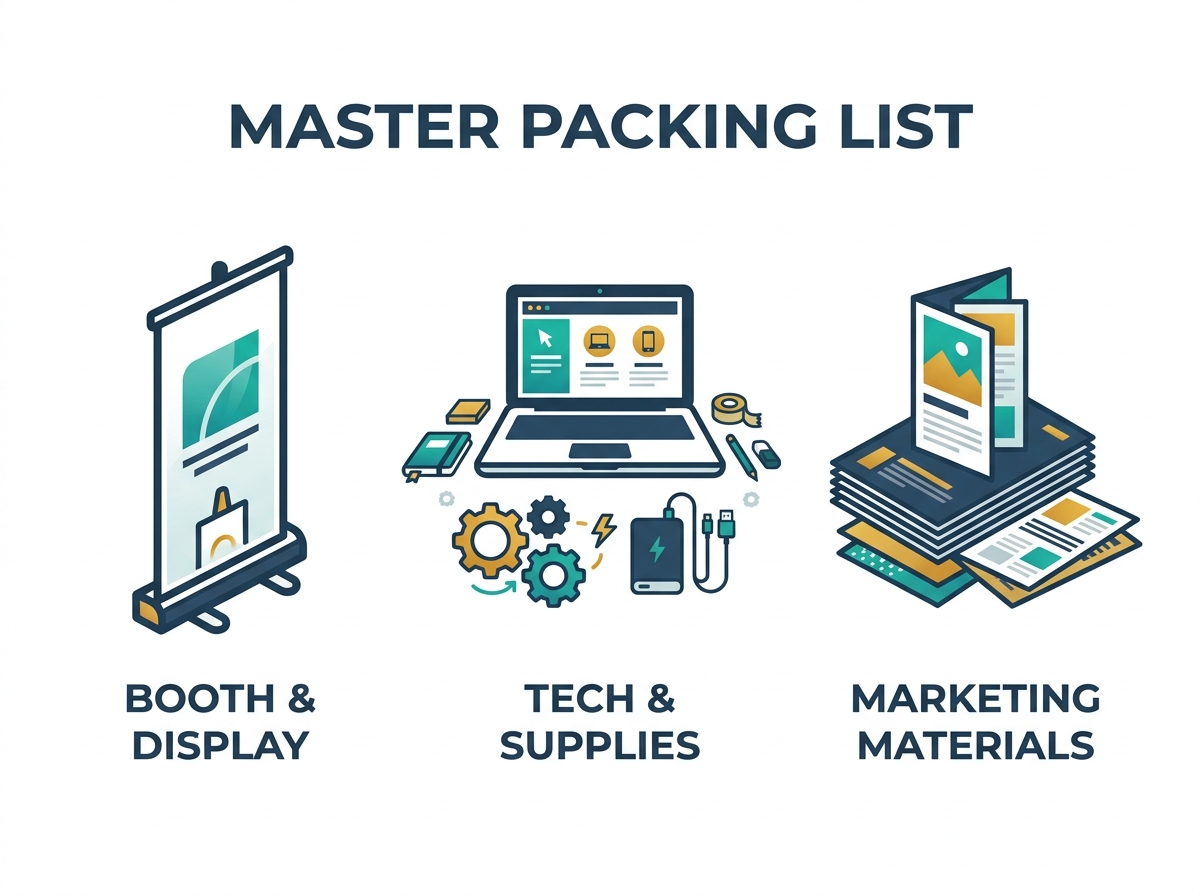
Next, create a master packing list. This is your single source of truth for everything you are bringing. Trying to remember it all is a recipe for disaster. A detailed list ensures nothing important gets left behind, from your main banner to a roll of tape.
To stay organized, break your list into categories. This makes it easier to pack and even easier to set up once you are on site. A simple breakdown might look like this:
- Booth & Display: Banners, flooring, furniture, lighting, and any structural elements.
- Tech & Supplies: Laptops, tablets, chargers, extension cords, and office supplies like pens and tape.
- Marketing Materials: Brochures, business cards, and all of your promotional giveaways.
Alongside your packing list, you need a shipping manifest. This is a detailed inventory for your shipping carrier. It lists every crate, box, and item being transported. Accuracy here is critical for calculating drayage fees and tracking your shipment through every step of its journey.
Finally, confirm all deadlines. Call your shipping provider to verify pickup and delivery dates. Then, call the venue or general services contractor to confirm the delivery address and receiving hours. This final check prevents your booth from getting lost in transit or arriving late. A simple phone call can prevent a huge headache.
The Modern Exhibitor's Tech Stack
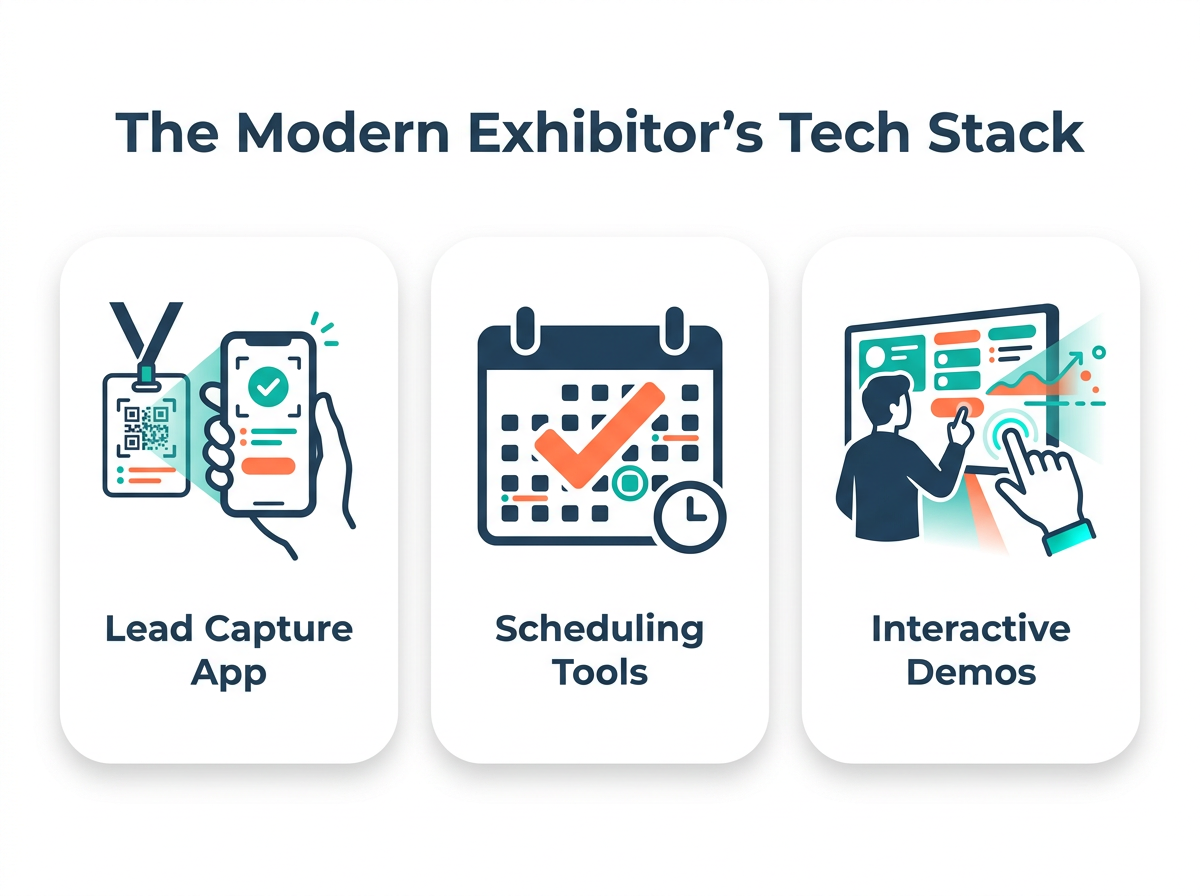
Today, the right technology can make or break your trade show success. A modern tech stack automates tedious tasks, helps you capture better data, and creates a more engaging experience for visitors. It's about working smarter, not harder, to make sure every dollar of your budget counts. This collection of tools transforms your booth from a simple display into an efficient lead generation machine.
Forget manually typing business cards into a spreadsheet. Modern lead capture apps are a must have. With a quick scan of a badge or QR code, you instantly get a visitor’s contact information. This data flows directly into your Customer Relationship Management (CRM) system like Salesforce or HubSpot. This process saves hours of work and cuts down on data entry errors after the show.
These tools are built for speed and accuracy. According to a review of top lead capture apps, many now offer customizable fields. This lets you qualify leads on the spot by adding notes about their needs or interest level. This means your sales team gets clean, actionable data to start their follow up immediately.
Don't leave your most important meetings to chance. Appointment scheduling tools make it simple to fill your calendar with high value prospects. You can add a booking link to your pre-show emails and marketing content. At the event, a QR code at your booth can let interested visitors book a time to talk with an expert on the spot.
Pre-booking appointments is a proven strategy for improving your return on investment. As one guide on smart event strategies suggests, having a schedule of qualified meetings ensures your team's time is spent on conversations that matter. It turns your booth into a hub for productive, scheduled discussions rather than just random encounters.
Technology can also make your booth more fun and memorable. Interactive elements grab attention and keep people engaged longer. Think about using large touchscreens for product demos or a live social media wall that shows posts with your event hashtag. Digital games or raffles are another great way to draw a crowd and capture contact info in an exciting way.
The goal is to create an experience, not just a display. Case studies of successful exhibit designs from Rockway Exhibits often show how interactive technology plays a key part. Giving visitors something to do, like exploring a digital catalog or playing a game, makes your brand more memorable and encourages them to stick around longer. It helps create a positive feeling about your company.
Exhibiting with a Conscience: The Sustainable Trade Show Guide
Trade shows can create a lot of waste, from discarded brochures to single use booth structures. But you can stand out by making your exhibit more eco-friendly. This approach not only helps the planet but also sends a positive message about your brand to modern buyers. It's about being thoughtful with your choices at every step.
Start with sustainable booth design. Instead of building something new every time, choose a modular and reusable exhibit. As modular booth specialists explain, systems made from materials like recycled aluminum can be reconfigured for different shows. This reduces waste and saves money in the long run. Also, an easy switch is using LED lights, which consume far less energy.
Next, go paperless to significantly cut down on waste. Think about how many flyers and brochures you see in the trash cans at the end of the day. You can avoid this by using QR codes. Attendees can scan a code to get your digital catalog, case studies, or price list. Digital business cards are another great way to exchange information without printing anything.
Finally, consider the environmental impact of your travel and shipping. Moving your booth materials and flying your team to the event generates a carbon footprint. You can help balance this out by investing in carbon offset programs. These certified initiatives fund projects, like reforestation or renewable energy, to counteract the emissions your participation creates.
Phase 5: The Main Event — Execution on the Show Floor
The doors are open, and the show floor is buzzing. All your planning leads to this moment. This phase is about flawless execution. It is time for your team to shine, engage visitors, and turn all your careful preparation into measurable results. Your checklist now shifts to a day-of-show guide for success.
On setup day, your first priority is getting the booth ready. Test every piece of technology, from the TVs to the lead capture app on your tablets. Wipe down all surfaces and make sure your displays look perfect. Before the show opens, hold a final team huddle to review the day's goals and get everyone energized.
Your team's main job is to start conversations. Don't let them hide behind a table. Encourage them to stand in the aisle and engage people walking by. It helps to have a few good conversation starters ready. Using open-ended questions is a proven way to get people talking.
For example, instead of a simple “Can I help you?”, try asking “What brings you to the show today?” This simple change invites a real discussion. As guidance from trade show experts at Gertner suggests, questions that focus on the visitor and their role help you quickly qualify them. This lets you spend your time on the most promising prospects.
It’s also important to network with other exhibitors, as long as they aren't your direct competitors. Walk the floor during slow periods and introduce yourself. You might find a new partner for a future collaboration or learn about other industry events. These connections can be just as valuable as the leads you collect.
Phase 6: The Money Phase — Post-Show Follow-Up & ROI Analysis

The trade show is not over when you pack up the booth. The work you do in the days and weeks after an event is what turns your conversations into customers. This final phase is all about prompt follow up and carefully measuring your results. It’s how you prove your investment was a success and learn how to do even better next time.
Don't treat every scanned badge the same. Your first step is to sort your leads into categories like Hot, Warm, and Cold. Hot leads are prospects who showed strong buying intent and should get a personalized email within 24 hours. Warm and cold leads can be added to an automated nurture campaign, but speed is important for everyone.
A structured email sequence is a powerful tool for this process. As marketing experts at Protocol 80 outline, a series of five emails can effectively guide a new contact. It starts with a simple “nice to meet you” message and moves to sharing valuable resources, like a relevant case study, before asking for a meeting.
Now for the big question: was the show worth the expense? To find out, you need to calculate your return on investment (ROI). The formula is simple. Just subtract the event's total cost from the gross profit you generated from it. Then, divide that number by the total cost to get your ROI percentage.
So, what counts as a good return? While it varies by industry, a strong trade show ROI benchmark is between 300% and 500%. This means you’ve generated $3 to $5 in new revenue for every $1 you invested in the event. This helps you justify the budget for future shows.
But ROI isn't only about immediate sales. These events build important brand awareness and strengthen industry relationships. In fact, as event industry data from Cvent shows, 52% of business leaders feel that trade shows deliver the best ROI of all marketing channels. This highlights their long term value.
Finally, schedule time to gather your team for a debrief. What worked well on the show floor? What could be improved? Documenting these learnings is essential for making your next event even more successful. Holding a project post-mortem meeting ensures these valuable lessons are not forgotten.
Conclusion: Turn Your Checklist into a Repeatable Success System
A comprehensive trade show checklist is more than just a list of tasks. When used correctly, it becomes your playbook for success. It transforms the chaotic, stressful process of event planning into a predictable and scalable system. This is not a document you use once and forget. It is a living guide that gets smarter with every show you attend.
The biggest wins at any event come from a complete approach. Your success isn't just about a nice booth or friendly staff. It's the result of combining smart pre-show strategy, flawless on-site execution, and fast post-show follow-up. Each phase builds on the last, and your checklist is the thread that ties it all together.
Ready to put this plan into action and stop leaving money on the table? Start building your own roadmap for success today. Your next trade show could be your most profitable one yet.
Frequently Asked Questions
What are the most important things to pack for a trade show?
Pack items in three key categories: Booth Essentials (banners, tablecloth, displays, lighting), Office/Tech Kit (power strips, tape, zip ties, chargers, lead scanner), and Personal Comfort Items (comfortable shoes, water bottle, snacks, hand sanitizer). A detailed packing list categorized this way prevents forgetting critical items and ensures smooth setup once you're on-site.
How do you prepare for a first trade show?
Start planning at least 6 months ahead by setting clear, measurable goals and establishing a strict budget. For your first show, consider starting with a smaller 10x10 booth to learn the process without overwhelming yourself. If possible, attend the same show as a visitor the year before to understand its flow, audience, and competitors before exhibiting.
What makes a trade show booth successful?
A successful booth combines visual appeal (strong branding, good lighting, clean design), engagement opportunities (interactive elements, knowledgeable staff), and clear messaging (visitors should understand what you do within 3 seconds). The booth layout should be open and inviting, with vertical elements to increase visibility from a distance.
How do you attract visitors to your booth?
Start with pre-show promotion via email and social media, highlighting your booth number and offering incentives to visit. At the show, use an open-plan booth design with no table barriers, incorporate interactive demos or activities, offer a compelling (not cheap) giveaway, and position staff to actively engage people walking by with open-ended questions.
What are the biggest hidden costs of exhibiting?
Beyond the booth space fee, the largest hidden costs are drayage/material handling (moving your items from the loading dock to your booth), electrical services, internet access at the booth, and staff travel and accommodations. These can easily double your expected budget, so always include an extra 15-20% contingency for unexpected expenses.
How soon should I follow up with leads after a show?
Speed is crucial for lead conversion. Contact your hottest leads within 24 hours of the show ending. All other leads should receive their first communication within 48-72 hours. Research shows leads followed up within 24 hours are 5-10 times more likely to convert than those contacted a week later, as lead quality significantly degrades after one week.
Is it better to have more swag or better quality swag?
Quality over quantity, always. A single high-quality, useful item like a portable charger or durable tote bag with your logo creates a better brand impression and has a longer lifespan than numerous cheap pens that will be thrown away. Choose items that align with your brand's perceived value and will actually be used by recipients after the show.